









How Much Should You Spend on an Engagement Ring?
Updated 19 November 2026
There is no set number of months’ salary you need to spend on an engagement ring. Start with an amount you can comfortably afford, then decide which details matter most to you and the person who will wear it. A ring that feels right need not use every pound of your budget.

Setting an engagement ring budget
Before browsing diamond engagement rings, look at the money you have available after your regular commitments and planned expenses. If you are saving towards the purchase, choose a realistic monthly amount and a timescale. Treat the resulting budget as a limit rather than a goal. If you find a ring you love for less, there is no reason to spend the difference.
An average spending figure cannot tell you what is right for your circumstances. Your housing costs, savings plans and other priorities matter more than someone else’s purchase. If you are choosing the ring together, agree a comfortable budget before you start comparing designs.
What our customer data shows
Across 1,517 engagement rings recorded by Lily Arkwright from 1 January to 31 October 2026, the average (mean) recorded value per ring was £2,503. The median was £2,281: the middle value when the rings are arranged from lowest to highest.
The figures cover a mix of stone types, settings and specifications, including allocated upgrades and components. They describe our own records and give you context rather than a target to spend or a price for one particular ring.
On our Manchester and London engagement-ring booking forms for the same period, the median starting budget was £2,500, based on 440 replies that gave one specific amount. A starting budget could cover several products. These forms have not been matched to individual purchases, so the figures do not show how someone's budget changed when they bought.
Your own comfortable limit still comes first. Use the figures as a starting point for questions, then compare the rings you actually like within your budget.
How we calculated these figures
Source: Lily Arkwright sales and consultation-booking research, prepared on 5 November 2026, covering 1 January to 31 October 2026. The sales analysis counts 1,517 ring items across 1,513 orders. Recorded ring values include amounts assigned to rings, upgrades and components, using the source reporting treatment for refunds and exchanges. Allocated tax and delivery can be included. The average is rounded to the nearest pound.
The booking-budget median uses 440 replies giving one specific amount; budget ranges are excluded from that calculation. Repeat bookings count separately. Explicit cancellations and service-only bookings are excluded, while recorded no-shows remain included.
What affects the price?
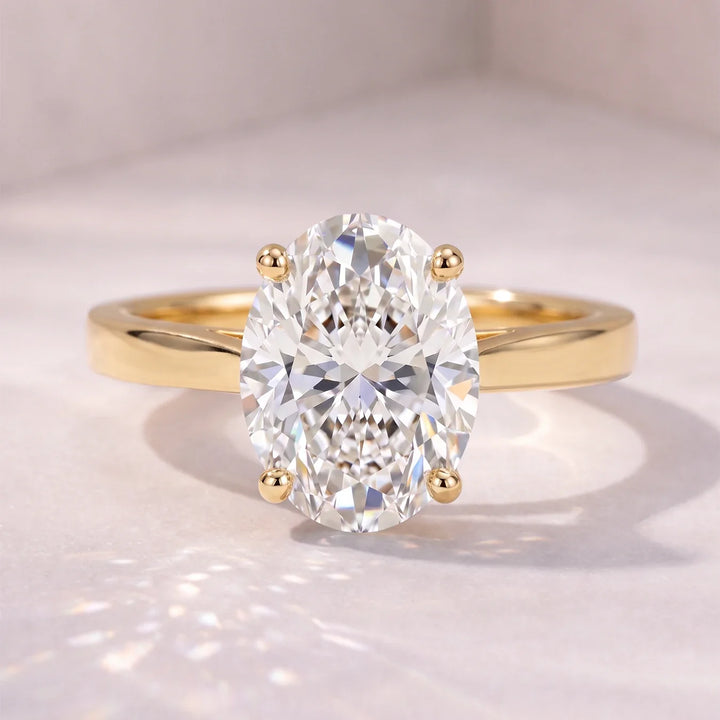
The centre stone is only part of the cost. Its weight, quality and origin all contribute, along with the setting, metal and smaller stones. Two rings that look similar in a photograph can have quite different specifications.
When looking at lab-grown diamonds, remember that they have essentially the same chemical, physical and optical properties as natural diamonds, but a different origin. Compare the actual stones, their grading information and the finished ring prices. The choice may change what is available within your budget; it should not become a reason to exceed it.
For current lab-grown diamond ring prices, use our catalogue price index. Compare the same carat weight, shape, colour, clarity and metal, then check the complete configuration you want.
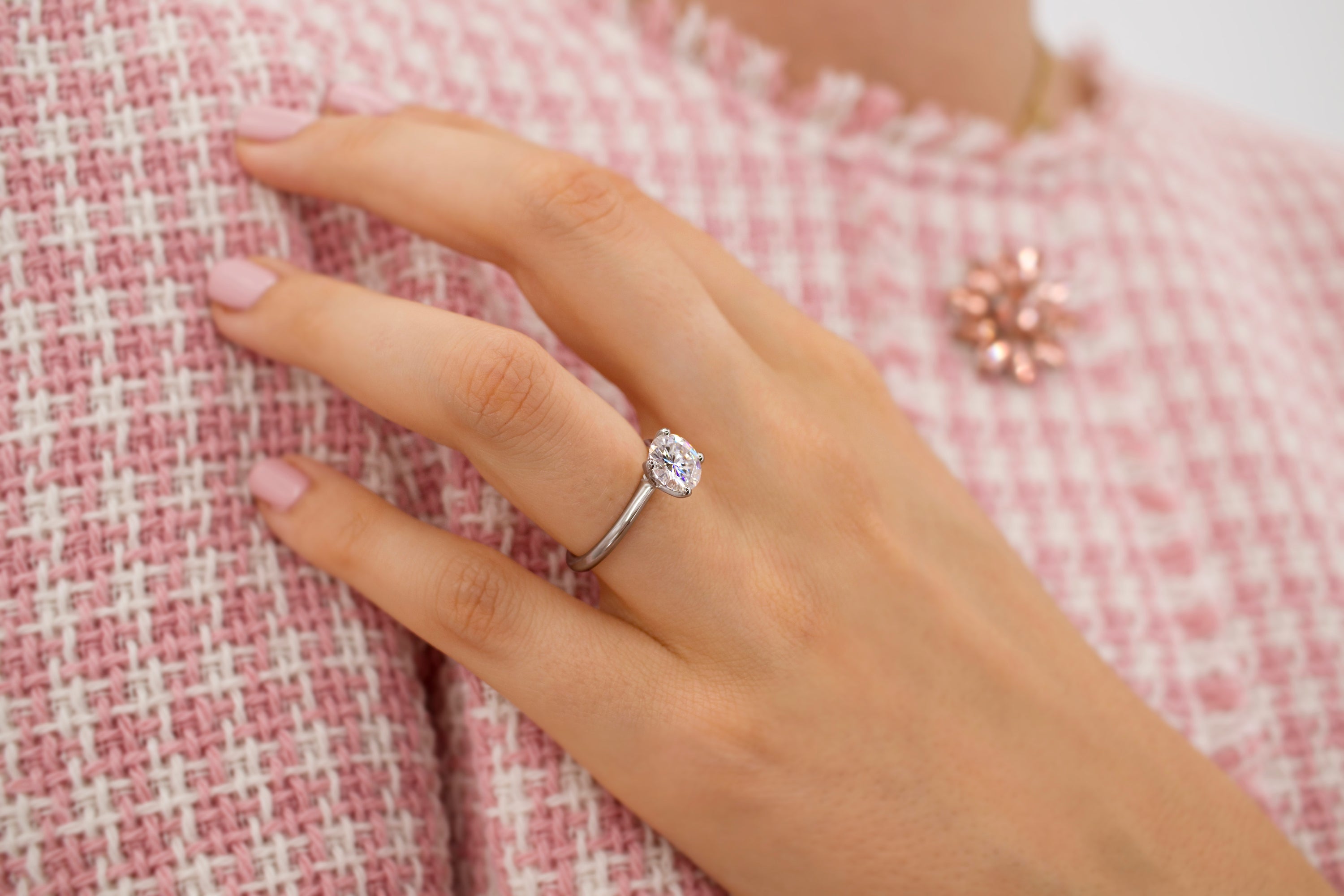
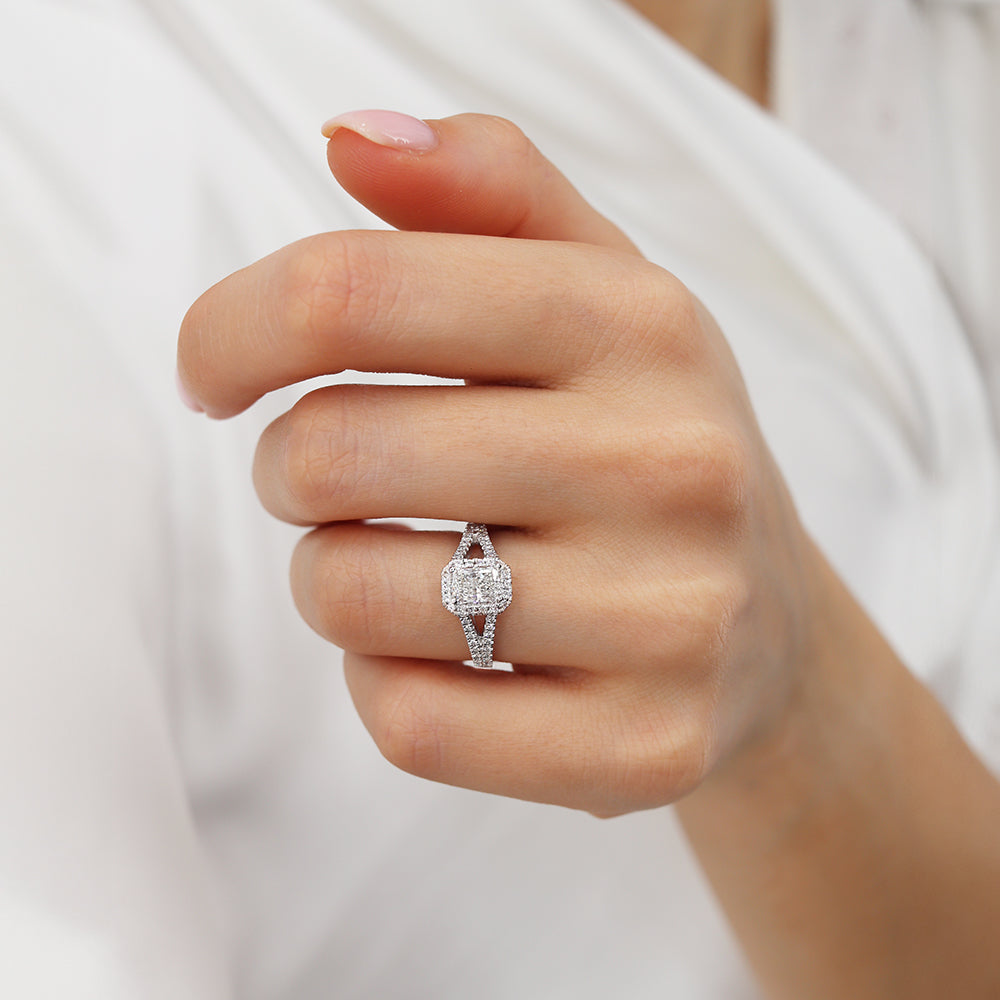
A solitaire keeps the design focused on one stone, but a simpler appearance does not automatically make it the cheapest option. The centre stone and metal still affect the price. Likewise, a halo or stone-set band adds detail, but the overall cost depends on the complete specification.
Comparing rings within your budget
Choose two or three priorities: perhaps the stone’s shape, a particular metal or a comfortable setting. Compare a small shortlist against them. If one option costs more, ask what that difference buys you and whether you will notice or value it when wearing the ring.
Compare natural diamonds and lab-grown options separately, using the details provided for each stone. Check dimensions as well as carat weight, and compare complete rings rather than a loose-stone price with a finished-ring price.
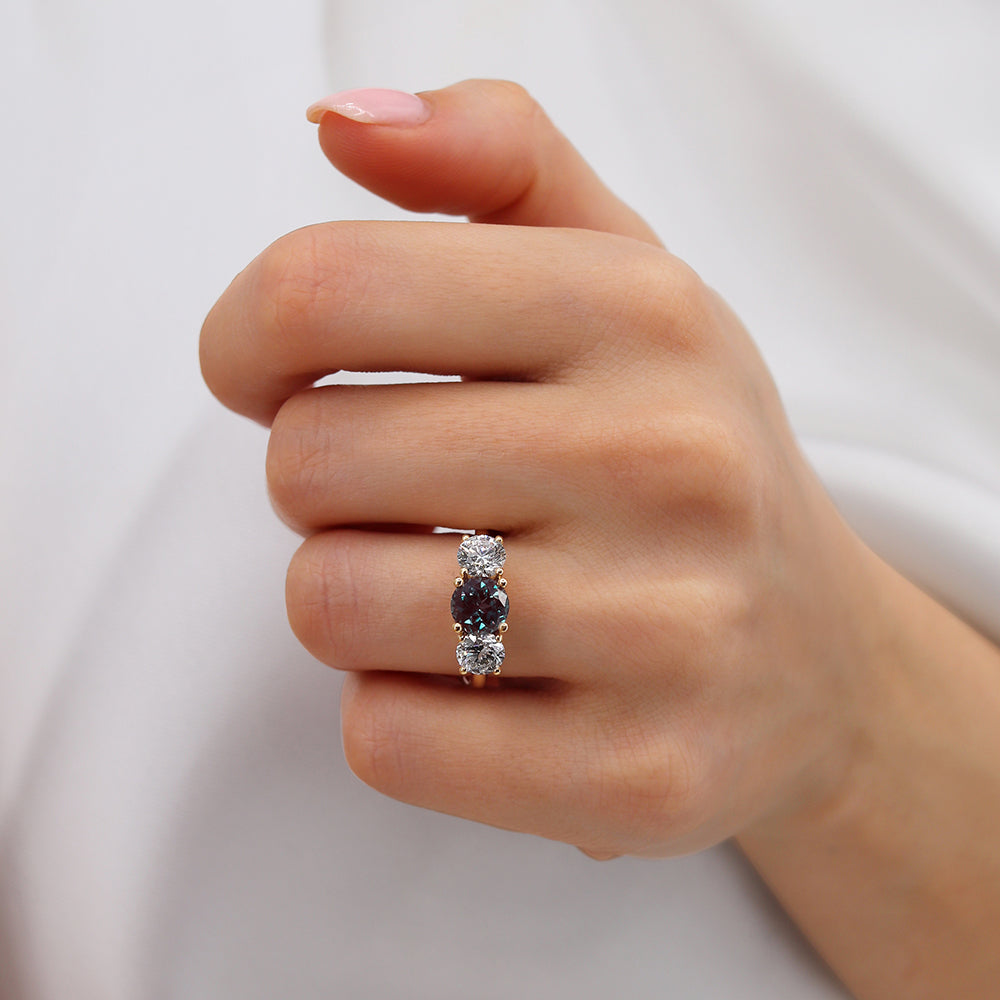
If a design sits above your budget, consider which detail you would be happy to change. A different centre-stone size, metal or setting may give you another option. You can also take more time to save. You do not need to accept an upgrade simply because it is offered.
Personal details deserve a place in the budget too. In the same January-to-October records, 298 of 1,513 orders containing an engagement ring (19.7%) included a recorded upgrade, such as a change to band width, setting or clarity. Decide which changes matter to the look or feel you want, and ask how each affects the complete quote.
Before you order
Check what the quoted total includes and whether choices such as engraving or a different ring size change it. Read the resizing and returns terms for the particular ring, especially if you are requesting a personalised or bespoke design. Confirm the delivery estimate if you have a date in mind.
If you are considering instalments, compare the total amount payable as well as the monthly figure, and check any interest, charges and repayment dates. Make sure the payments fit alongside your other commitments.
Once you have found a ring that suits your priorities and your budget, you can stop looking for reasons to spend more. The price is one part of the decision, not a measure of what the ring means to you.
Written by Rowan Aplin