









Created: April 13 2021
Updated 12 November 2026
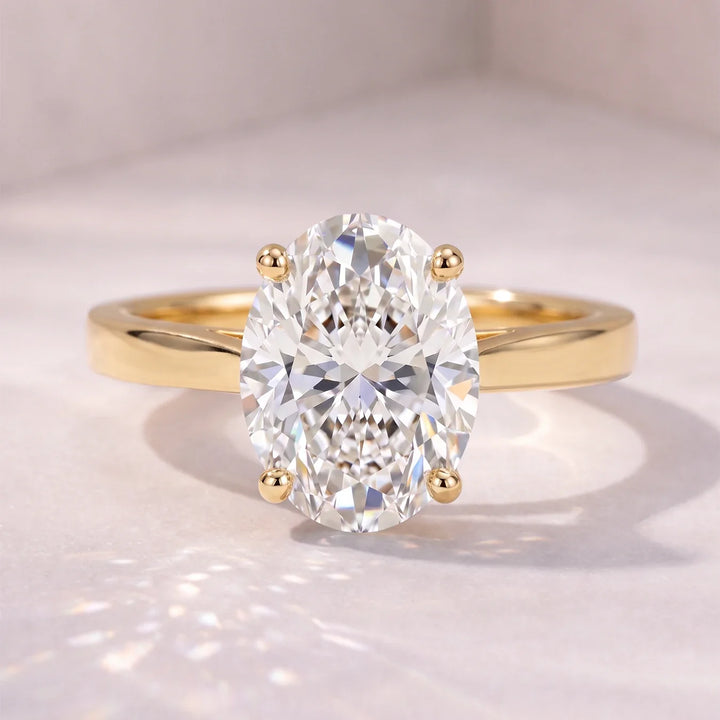
Moissanite is silicon carbide, a different gemstone from diamond. The material used in modern moissanite jewellery is laboratory-grown. Its bright reflections and flashes of rainbow colour give it an appearance of its own.
You can see different approaches to the setting in the classic Grace solitaire and Esme shoulder set. If you have a particular combination in mind, ask about the bespoke ring design service and which stones can currently be sourced for it.
The Esme Radiant Moissanite Ring combines an elongated centre with a surrounding halo and stone-set shoulders.
The appeal may be its colourful sparkle, the shape of a particular stone or the price of the complete ring. View it under ordinary lighting as well as bright spotlights.
Centre-stone dimensions, accent stones, metal and setting all affect the complete ring price. For another introduction to the gemstone, see LDNFASHION's article on moissanite jewellery.
Laboratory-grown describes origin, not the environmental impact of a finished ring. Ask for evidence about the particular supplier if this matters to your choice.
Moissanite resists scratching well, but hardness is not the same as resistance to knocks. The stone and setting still need care during everyday wear.
Charles & Colvard is a moissanite brand associated with the Forever One range. Confirm the size, colour description and documentation currently available before ordering.
Forever One is a range name, not a stone shape or a cutting pattern. Charles & Colvard has offered it with D–F colourless and G–I near-colourless descriptions. The company explains that this terminology borrows from a diamond colour scale that was not designed for moissanite.
Check the description of the stone you are being offered, rather than assuming every Forever One stone is D–F. If you would like help reading a specification, email hello@lilyarkwright.com.
The colour illustration above is a reference to descriptive terminology, not a grading tool or a GIA report. Cutting also affects appearance: look at the actual stone in motion rather than choosing by a facet count alone.
Clarity concerns internal inclusions and surface blemishes. Check who supplied the description. A certificate of authenticity and a detailed independent grading report serve different purposes.
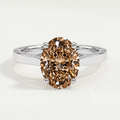
The Bespoke Two Tone Ring with Halo has an oval centre framed by smaller stones.
Hearts and Arrows describes a symmetrical facet pattern, usually associated with round stones. The hearts and arrows are viewed from different directions using an appropriate viewer. Forever One and Hearts and Arrows are therefore not competing labels: both can describe the same stone.
The pattern does not settle the choice for you. Compare the individual stone’s proportions and appearance rather than treating every Hearts and Arrows stone as automatically better than every other cut.
Compare Lily Arkwright moissanite and any available Charles & Colvard option with the same outline, similar dimensions and the same setting. If prices differ, ask which specifications change. A lower price alone does not establish a difference in quality.
Compare dimensions, colour description, facet pattern, visible clarity and price under similar conditions.
The video below can help illustrate how oval stones reflect light. It is not a guarantee that every stone from either brand will look the same as those examples.
“Crushed ice” describes an appearance with many small, broken-up reflections. Other cutting styles show broader flashes. This is a matter of visual preference, so watch the stone move rather than deciding from the name alone.
The next video shows a coloured-stone example. Check the current colour options and request images of the specific stone being offered for your ring.
Jewellery moissanite is grown as silicon carbide in controlled laboratory conditions, then cut and polished into gemstones. Growth and finishing methods vary by producer. Ask about the particular producer if you want to know more about its process.
Does every moissanite have a visible tint? No. Colour descriptions vary, and lighting affects what you see. Compare the actual stones rather than assuming every example has the same appearance.
Is it unbreakable? No gemstone or setting is immune to damage. Remove rings for activities that could subject them to a hard knock.
What if it looks dull? Surface dirt or residue can affect a ring’s appearance. If cleaning does not help, ask the jeweller to inspect it rather than assuming the stone has changed internally.
Setting styles are a separate decision from the moissanite brand. The examples below show a plain solitaire, stone-set shoulders and a halo. If none is quite right, the bespoke ring design service offers a way to discuss your ideas.
The Grace Round Cut Moissanite Ring keeps the centre easy to see in a plain solitaire setting.
Grace lets the centre stone lead the design. For more shopping context, The Telegraph’s guide to finding a wonderful jewellery piece to buy online includes Lily Arkwright. Use the current product specification when considering your own ring.
The Giselle Round Cut Moissanite Ring adds a line of small stones along the shoulders.
Giselle gives a round centre more surrounding sparkle than a plain band. Check the centre and accent-stone materials separately, and try the ring beside your intended wedding band to see how the settings meet.
The Esme Radiant Cut Moissanite Ring frames an elongated centre with a halo.
Esme’s halo adds an outer border around the centre. Compare the complete ring’s dimensions and height, rather than the centre-stone measurement alone. Confirm the available options for the particular design you choose.
If you would like to coordinate other jewellery, compare our moissanite earrings and pendants by their listed stone and metal specifications too.
Choose the stone whose appearance you prefer within a ring that fits your budget and routine. Ask for the final specification in writing, including the centre’s dimensions, accent materials and supplied documentation.
Gemstone cover and the ring’s manufacturing warranty are different. Check the exclusions and who handles a claim, and keep the purchase documents. If you need help comparing two options, contact hello@lilyarkwright.com or call 0161 537 6773.
A consultation can help you compare the details that are difficult to judge from a photograph, including setting height and fit beside another ring.
For retailer information, see Assay Assured and the National Association of Jewellers listing, or read customer reviews on Trust Pilot.
To ask about a particular stone or arrange a consultation, email hello@lilyarkwright.com or call 0161 537 6773.
If you have a question about the options described here, leave a comment below or contact the team.