









Why Is the Wedding Ring on the Left Hand?
Updated 9 November 2026
In the UK, the wedding ring is traditionally worn on the fourth finger of the left hand, beside the little finger. The custom is often explained through the old “vein of love” story, but it is a tradition rather than a rule. You can choose the hand that suits your own customs and feels comfortable.
Where the left-hand tradition comes from
The ring finger has long been associated with love. In its history of engagement rings, GIA describes the fifth-century Roman writer Macrobius’s account of a betrothal ring worn on the fourth finger of the left hand. It was believed that a special vein ran from that finger to the heart.
There is no special vein unique to this finger, though the “vein of love” story survives as romantic symbolism. The custom also appears in wedding ceremonies: the Church of England’s marriage service specifies the fourth finger of the left hand. Other ceremonies and families have their own traditions.

The Lily Arkwright Ember Wedding Band shows how a fine stone-set band can be worn on its own.
Do engagement and wedding rings go on the same hand?
In the UK, many people wear the wedding band nearest the hand, with the engagement ring stacked above it. You can follow that order, wear the rings on different hands or wear just one day to day.
Try your rings together before deciding. They should feel comfortable when you bend your finger, and neither should depend on the other to stay in place. Stacking them in a particular order does not make a poorly fitting ring secure.
Before the ceremony, decide where you will keep your engagement ring during the exchange. If it feels tight on the other hand, keep it somewhere safe rather than forcing it onto a different finger.

A shaped option such as the Lily Arkwright Ellora Wishbone Wedding Band gives a different outline beside an engagement ring. Try the pair together to check the fit.
Does everyone wear a wedding ring on the left?
No. Wedding rings are also worn on the right hand, including in some German and Russian traditions. GIA’s guide to wearing engagement and wedding rings describes several customs, including choices based on comfort and personal preference.
A country’s tradition does not tell you how every couple will wear their rings. If you and your partner follow different customs, you can each choose the hand that feels right to you.

The Lily Arkwright Aurelia Wedding Band is shown here with a single row of round stones.
Do the two rings need to match?
They do not have to match exactly. You might prefer a simple platinum band beside a detailed engagement ring, or enjoy the extra sparkle of pavé wedding bands or eternity bands. Look at how the rings sit together, as well as how they look separately.
A small gap may be part of the look you like. If the rings press against each other or catch when you move your hand, ask a jeweller to check the pairing before you settle on it.

The Lily Arkwright Flat Court Wedding Band has a broad, polished surface for a simpler look.
When should you choose your wedding rings?
Once you have a wedding date, ask about the timing for your chosen design, size and any customisation. Leave time to try on different wedding band styles before committing, and confirm the expected arrival date. There is no need to choose identical bands if you prefer different styles.

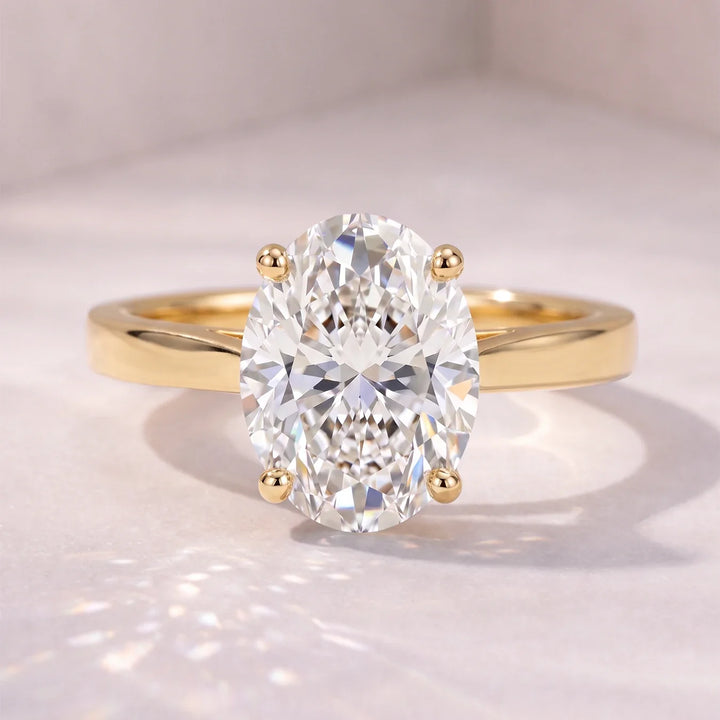
The Cecelia and twisted Ivy Wedding Band show two different band styles stacked around a solitaire.
Choose a width and profile that feel comfortable
A petite 1.65mm wedding band is a slim option. Designs between 2 and 3mm wide give a different balance, while bands between 4 and 6mm wide make a more substantial band. These are choices for any wearer: try different widths rather than choosing by a label or a photograph alone.

The Lily Arkwright Oval Profile Wedding Band is shown here as a plain polished band worn on its own.
Profile matters too. Compare classic court, modern flat court and sleek bevelled edge designs to see which shape you prefer. Notice how the ring feels at the sides of your finger and when you close your hand.
Our team can help with the process of finding a ring. Bring your engagement ring if you plan to wear them together, so you can see and feel the combination for yourself.

The Lily Arkwright Regular Oval Profile Wedding Band offers a slim, plain finish.
A tradition you can make your own
Whether you prefer a classic band, a sparkling eternity ring or a contemporary design, the hand you wear it on need not decide the style. Find a ring that feels comfortable and suits the way you want to mark your marriage.