









Are Lab Grown Diamonds Real Diamonds?
Updated 18 November 2026
Yes. A laboratory-grown diamond is diamond. It has essentially the same chemical composition and crystal structure as a natural diamond, but a different origin. “Lab-grown” does not mean imitation, flawless or untreated.
This article explains gemstone identity. For buying decisions about origin, budget and reports, use our lab-grown versus natural diamond comparison.
What makes a lab-grown diamond a diamond?
Diamond consists of carbon atoms arranged in a particular crystal structure. Laboratory-grown diamonds are produced mainly by high-pressure, high-temperature (HPHT) or chemical vapour deposition (CVD) methods. Both grow diamond material. A diamond’s growth origin should be disclosed when it is sold.
GIA’s laboratory-grown diamond questions and answers explains the material and the distinction between a lab-grown diamond and a simulant. A simulant resembles diamond but is a different substance.
How is diamond different from moissanite?
On smaller screens, scroll across to compare all columns.
| Stone | Material | Origin |
|---|---|---|
| Natural diamond | Carbon with the diamond crystal structure. | Formed in the earth. |
| Lab-grown diamond | Carbon with the diamond crystal structure. | Grown in a laboratory, usually by HPHT or CVD. |
| Moissanite | Silicon carbide, with different optical and physical properties. | The stones used in jewellery are laboratory grown. |
Moissanite can be a deliberate choice for its appearance and price; it should be described by its own name. A photograph, attractive sparkle or a colourless appearance does not establish that a stone is diamond.

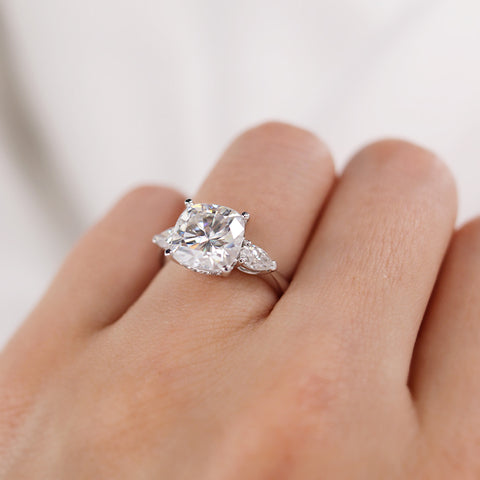
Explore the Ballet setting and confirm the centre and accent-stone specifications for the version you choose.
Can a lab-grown diamond have inclusions?
Yes. Laboratory growth does not guarantee a flawless diamond, a particular colour grade or identical appearance across stones. Inclusions and growth features can occur, and the cut affects how the stone handles light. Compare the individual diamond’s report, measurements and appearance.
Our guide to the diamond 4Cs explains how cut, colour, clarity and carat weight work together. Quality still needs to be assessed stone by stone.

How do you confirm a diamond’s origin?
Natural and laboratory-grown diamonds can look very similar, but a suitably equipped gemmological laboratory can distinguish them. GIA describes the advanced testing used for identification. Do not rely on a photograph or a basic at-home test to establish growth origin.
Ask for the report that accompanies the offered stone. Check its number, measurements, origin and any treatment comments. Our IGI and GIA report guide explains the different documents and the questions to ask.
What does lab-grown origin tell you about sourcing?
Laboratory growth avoids extracting that diamond from a natural deposit, but it still requires energy, equipment and materials. IGI’s consumer guidance notes the energy demands of diamond-growth equipment. Environmental impact depends on the producer, energy sources and the wider supply chain; lab-grown origin alone does not establish a lower footprint.
It also does not automatically prove labour standards or full traceability. Ask who produced and cut the stone, what documentation supports sourcing claims, and how the ring metal was sourced. Apply the same evidence-based questions to natural and laboratory-grown diamonds.

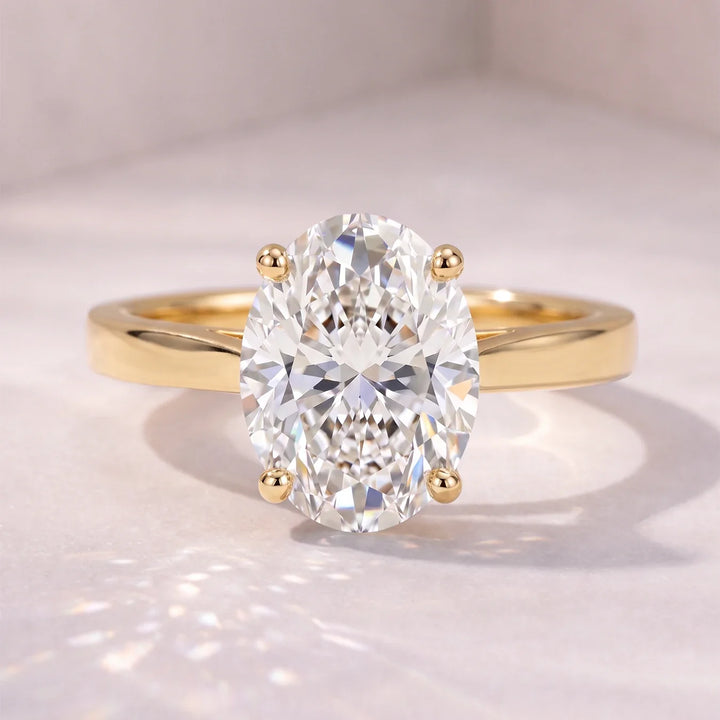
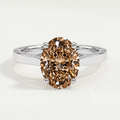
Lily Arkwright’s Hope oval lab-diamond ring is one design to compare.
How do prices compare?
Laboratory-grown diamonds often cost less than natural diamonds of similar specifications. Compare the complete ring, including the stone, metal, setting and any options, using prices checked at the same time.
Our lab-grown diamond prices and value guide provides dated, specified examples. Those examples are more useful than an old, undated price comparison, and neither a grading report nor growth origin guarantees future resale value.
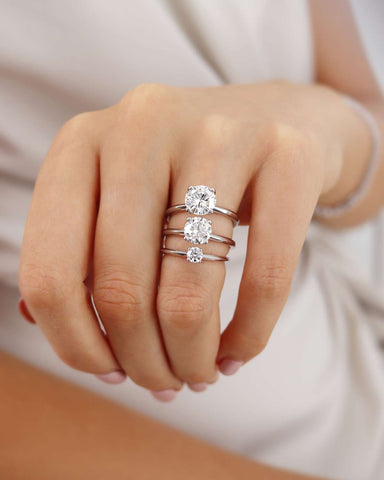
The Lillie natural-diamond setting is available with its own stone options. The photograph below illustrates the setting design; confirm the centre-stone identity and complete specification for the version selected.

Choosing the stone that suits you
Compare confirmed samples in similar shapes, sizes and lighting. Decide which appearance you prefer, then check the report, setting, fit, total price and order terms. Natural origin, laboratory growth and material identity are separate from whether you enjoy wearing a particular ring.
For the next steps, read our lab-grown diamond buying guide, explore lab-grown diamond rings or compare natural diamond rings. Confirm the details of the individual stone before ordering.