









Lab-grown vs natural diamonds: choosing your engagement ring
Updated
Lab-grown and natural diamonds are both diamonds. A lab-grown diamond forms in a controlled environment; a natural diamond forms within the Earth. They have essentially the same chemical composition, crystal structure and physical properties.
Choosing between them is personal. You might value a natural stone’s geological origin, or prefer the size a lab-grown diamond makes possible within your budget. Either way, compare the actual diamonds and finished rings: the label alone cannot tell you which you will enjoy wearing.
A quick comparison
On smaller screens, scroll across to compare all columns.
| What changes | Lab-grown diamond | Natural diamond |
|---|---|---|
| Origin | Grown in a controlled environment, usually by HPHT or CVD. | Formed within the Earth through geological processes. |
| Material and appearance | Diamond. Origin cannot be reliably established by appearance alone. | Diamond. Reliable identification of origin requires specialist testing. |
| Reports | The format depends on the laboratory, service and date; check the actual document. | Check the actual report and its scope, including any disclosed treatments. |
| Purchase price | Often costs less for broadly comparable specifications. | Often costs more for broadly comparable specifications; compare complete-ring quotes. |
| Everyday care | Hard, but the diamond and setting can still be damaged. | Hard, but the diamond and setting can still be damaged. |
| Sourcing and future value | Laboratory origin does not prove an environmental claim or guarantee resale value. | Natural origin does not establish the full supply chain or guarantee resale value. |
A lab-grown diamond is not the same thing as moissanite or cubic zirconia. Those are different materials that may be chosen for a similar appearance. Equally, the word natural does not tell you a diamond’s country of origin or its complete supply-chain history. Ask for the information that matters to your choice rather than reading more into a label than it says. Read the lab-grown diamond guide for growth methods and the natural diamond ring guide for choosing a natural stone.
How the diamond looks
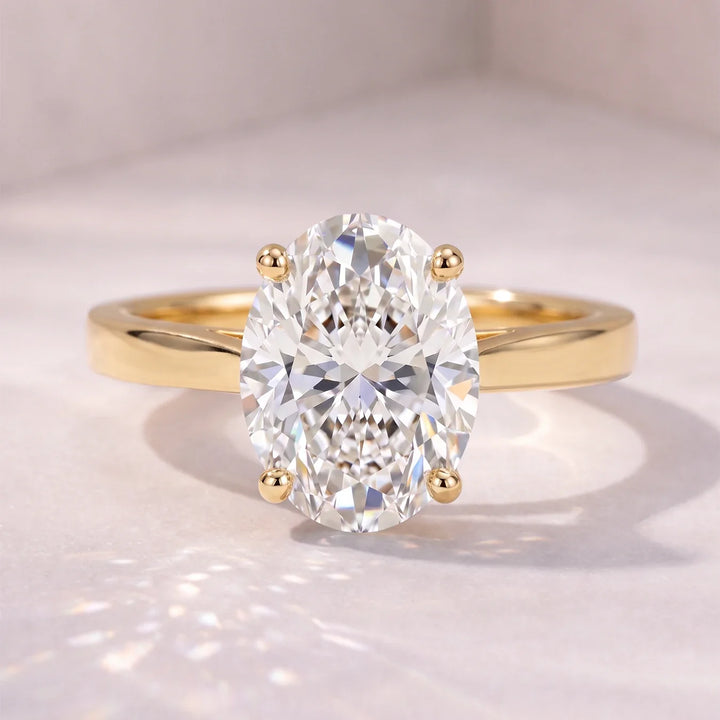
You cannot reliably establish origin simply by looking at a ring. Gemmological laboratories use specialised equipment to detect differences in growth features. A photograph of a sparkling stone does not prove that it is natural or lab-grown.
For appearance, compare each diamond on its own merits. Look for a pattern of light and dark that you find attractive as the stone moves, rather than judging it from one bright still image. Check whether any marks draw your eye and whether you like its colour in the metal you have chosen. The 4Cs give you a useful framework, but the report and the view of the diamond should work together.
Compare the dimensions, too. Carat is weight, so two diamonds of the same carat weight can have different outlines and face-up sizes. A larger number is not automatically a more pleasing ring, particularly if you prefer a smaller stone or want to leave more of your budget for the setting. Our diamond shapes and sizes guide explains how to compare those measurements.

Understanding the report
Request the report for the actual diamond being offered. Check its identification, measurements and report number, and ask how that report is matched to the stone. Read the comments for relevant disclosures, including treatments, instead of relying on the word certified on its own.
Be aware that laboratories and report dates matter. GIA now uses Premium and Standard assessments for its eligible colourless to near-colourless lab-grown diamonds, while its natural-diamond reports and coloured lab-grown reports have different formats. Older documents may use other grading descriptions. Ask the jeweller to explain any differences before comparing two reports as though their labels meant exactly the same thing.
If the paperwork feels unfamiliar, our IGI and GIA guide explains the questions to ask. You should be able to understand what you are buying without becoming a diamond grader.
Comparing the whole ring price
Lab-grown diamonds are often priced below natural diamonds of broadly comparable specifications. The gap varies, so use current quotations for the stones you are considering rather than a fixed percentage saving. Shape, measurements, quality, metal and setting all affect what you will pay. The prices and value guide shows how to compare complete-ring quotations.
Give both options the same brief: the shape you like, an approximate size, your preferred metal and a comfortable total budget. Then compare the complete ring, including the agreed specifications and any additional work. Check the applicable delivery, resizing and return terms before ordering, particularly if you are choosing a personalised design.
Neither choice needs a promise about future value to justify it. Buy a ring you want to wear, and treat any resale assumptions with care.

Sourcing claims deserve a closer look
Origin alone does not establish the environmental or social impact of a finished ring. If this is central to your decision, ask for specific evidence about the diamond’s supply chain, the producer’s energy use and the metal used in the setting. Broad words such as sustainable or ethical are less helpful than a clear explanation of what is known and what has been independently checked.
Choosing the ring you will enjoy wearing
Both types of diamond need sensible care. Diamond is hard, but a ring is not indestructible: the setting, exposed edges and small stones all deserve attention. Consider how the design fits your daily routine, alongside how it looks. Origin does not remove the need to check claws or get advice before cleaning a damaged ring.
Browse the lab-grown diamond rings and natural diamond engagement rings with the same preferences in mind. Shortlist a few, ask for their exact specifications and try comparable sizes if you can. Once the differences are clear, you can make a choice that feels like yours.
A showroom or virtual appointment lets you compare the options with your preferred shape, size and budget in mind.