









Originally published 7 April 2021. Reviewed 19 November 2026.
April 07, 2021
Lab Diamonds vs Mined Diamonds
I’m Kate, the Operations Director at Lily Arkwright. I’ve worked in the jewellery industry for around 20 years and hold the JET Diploma in jewellery education. When customers are considering a lab-grown diamond, two questions come up more than any others: “What’s the difference between this and a natural diamond?” and “Will I actually see a difference?” These are the questions I'd like to answer first. From there, I’ll explain the other considerations that can help you decide which option feels right for your ring.
This article will answer the main buying questions. For a more technical comparison, see our lab-grown versus natural diamond guide.
What is the difference between lab-grown and natural diamonds?
Well, for starters both are diamonds, the only difference is how they started forming. A natural diamond formed within the Earth, while a lab-grown diamond was created in a controlled environment. They have essentially the same chemical composition, crystal structure and physical and optical properties.
This means a lab-grown diamond isn’t a different gemstone made to resemble diamond. Unlike moissanite, which you may also have come across while browsing rings, is a different material. How to choose between them is your personal choice and what the diamond’s origin means to you, alongside your budget and the ring you would like to wear.
Will I see a difference between a lab grown and natural diamond?
The honest answer is no! You really can't tell whether a diamond is lab-grown or natural simply by looking at it. Identifying its origin requires specialist testing under lab conditions.
That doesn’t mean every diamond looks the same. You may prefer the appearance of one stone over another because of its cut, proportions, colour or clarity. My advice is to look closely at the individual diamonds you’re considering, rather than the words “lab-grown” or “natural” to tell you how beautiful each one will be.
How much difference will it make to my budget?
Lab-grown diamonds generally cost less than natural diamonds with comparable characteristics. That can give you much more flexibility over the size and specification of your stone, or maybe personalise your ring design via custom and bespoke routes. I would always advise my customers to approach the comparison in two ways.
First, compare similar diamonds: the same shape, a similar carat weight, and comparable colour, clarity and cut quality. Keep the setting and precious metal the same too. This helps you understand how much the diamond’s origin changes the overall price. Then compare what you would choose within your budget. You might prefer a larger lab-grown diamond, a smaller natural diamond, or a more detailed setting with either option.
And remember, you don't need to choose the largest stone your budget allows. Think about the proportions you or your partner would enjoy wearing and how the finished ring will feel on the hand. A lower price can also be an opportunity to spend less.

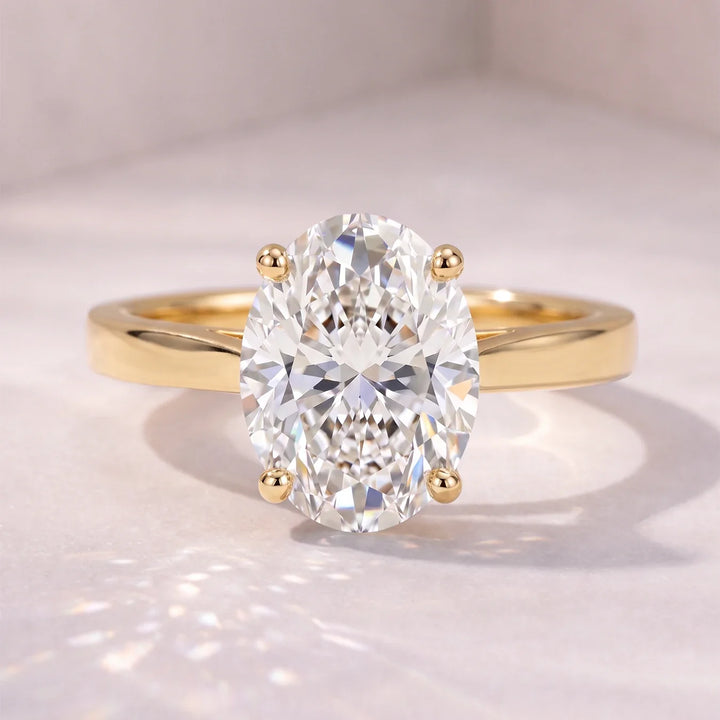
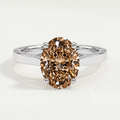
For a more specific pricing example, the Isabella solitaire with a 1.00ct oval lab-grown diamond, D colour, standard VS1 clarity set in 18ct yellow gold was £1,732 on 19 November 2026. Whereas the natural diamond version of the same ring and diamond specification would be £4,693. Our catalogue price index lets you compare more specified lab-grown ring prices.
The choice is really yours and what's most important to you. You can explore our lab-grown diamond engagement rings to compare available shapes, settings and metals.
What should I look for when comparing the diamonds?
Once you understand the difference in origin, I would bring your attention back to the individual stones. You'll probably hear a lot about the 4Cs whilst researching about diamonds and these are all important factors to consider
The cut quality matters because it affects how a diamond handles light. Carat describes its weight, while colour and clarity describe other characteristics that can influence its appearance and price. A diamond’s specifications are useful, but they need to be understood alongside the stone itself.
At Lily Arkwright, we have a team of experts who hand select each and every diamond that we set into a ring or any piece of jewellery. They absolutely pay attention to the diamond specifications, but they also review the magnified videos and images of the diamonds before choosing. The specification can tell you a lot about a diamond, but it will never replace looking at how the light performs and how much it sparkles.
You can also ask to see the video of a diamond before you make your purchase too. That way you don't need to take your jewellers word for it, you can see for yourself how nice a diamond looks.

Will a lab-grown diamond last as well as a natural diamond?
Lab-grown and natural diamonds have essentially the same physical properties, including their hardness. Both are suitable choices for an engagement ring intended to be worn for many years. Choosing a lab-grown diamond does not mean accepting a temporary stone.
Neither is indestructible. Diamonds resist scratching very well, but a hard knock can still cause a chip or fracture. The setting also needs care, whichever type of diamond it holds.
I would give either ring the same attention: remove it for activities where it could receive a hard impact, keep it clean, and have the setting checked periodically. The diamond’s origin does not replace the need to look after the finished piece.

Why might I choose a natural diamond?
For some people, the appeal is knowing that their diamond formed naturally within the Earth, long before it became part of a ring. That history can be an important part of what makes the stone feel special. If that connection matters to you, it deserves a place in your decision. You do not have to dismiss it simply because a lab-grown diamond could offer a larger stone for the same budget.
Equally, you do not need to feel that you should prefer a natural diamond because engagement rings have traditionally featured them. What matters is understanding the choice and being comfortable with it.
I would also be cautious about choosing either type on a promise of future resale value. If selling or trading in your ring later is an important consideration, you'll need to consider your purchase as a longer term investment and heirloom piece.

Treat an engagement ring as a purchase to enjoy rather than a guaranteed investment. Future resale depends on the individual ring and the buyer or market available at the time. A grading report does not guarantee a resale price.
Before ordering, read the current delivery and returns policy, warranty terms and any resizing conditions for the chosen ring. If you are considering instalments, check the total payable and current provider terms rather than assuming every plan is interest-free.
What about ethical and environmental considerations?
These are reasonable questions to ask. Natural diamonds of course come from the ground which requires mining and has a big visible impact on the earth in order to reach them. But growing diamonds also requires energy and space. A lab-grown diamond should not automatically be described as having no environmental impact.
Once a diamond has been mined or grown, the rest of its journey to the jeweller is the same regardless of its origin. Both will require polishing and cutting by experts before being checked and in some instances certified.
My advice is to choose which option feels right to you. There is something very magical about owning something that took millions and billions of years to form and started off as a rock in the ground. It takes great skill and craftsmanship to then turn that rock into a beautiful diamond. However, if you want to choose a more sustainable option, this is where lab grown diamonds fit in perfectly.

What paperwork should come with my diamond?
That brings me nicely to another question I see being asked around certification. Not all diamonds are certified however, here at Lily Arkwright, all centre diamond stones will be certified either by IGI or GIA. You can ask to see the independent laboratory report associated with any diamond you are considering. It should make its natural or laboratory-grown origin clear and explain the characteristics assessed.
 The report will tell you in more detail about a diamonds proportions, cut quality, symmetry, polish and Fluorescence. These are all additional factors you can also consider alongside the 4SCs. I would treat the report as part of the decision, alongside viewing the diamond and understanding the ring’s design.
How are Diamonds graded?
The 4Cs remain useful buying vocabulary, but laboratories and report services can use different assessment systems. Check the report type and issue date. Our diamond grading reports guide explains the current distinctions.
Cut concerns a diamond’s proportions and workmanship; shape describes its outline. GIA’s standard overall cut grade applies to round brilliant diamonds within its stated scope. Look at the particular stone rather than assuming every shape receives the same assessment. GIA explains diamond cut.
Where the report uses the D-to-Z scale, D is the colourless end and Z is light colour within the normal range. Fancy colours such as pink or blue are assessed separately. GIA’s colour guide explains the scale.
Clarity describes inclusions and surface blemishes assessed under magnification. The GIA scale runs from Flawless (FL), through IF, VVS, VS and SI, to Included (I1–I3). The individual characteristics and their visibility matter alongside the grade. Read GIA’s clarity guide.
Carat measures weight rather than visible size: one carat is 0.2 grams. Compare the stone’s millimetre measurements and proportions as well as its weight. Our diamond shapes and sizes guide explains what to look for.
How to check a diamond report
Ask which laboratory issued the document, which diamond it covers and how the stone is matched to it. Check the report number with the issuing laboratory and read the actual scope of the assessment.
A centre-stone report does not necessarily cover every small accent diamond in the ring. Ask what paperwork accompanies the finished piece. Our report-checking guide explains the questions to ask.
How are Lab Grown Diamonds made?
High pressure, high temperature (HPHT) growth uses a diamond seed under high pressure and temperature, with carbon supplied for crystal growth. It is one of the two principal methods used to produce laboratory-grown diamonds.
Chemical vapour deposition (CVD) grows diamond from a carbon-containing gas in a controlled chamber. Growth, post-growth treatment, cutting and polishing are separate stages. Ask what is recorded for your chosen stone.

How do Lab Grown Diamonds compare to Moissanite?
Moissanite is a different gemstone, rather than another type of diamond. It is worth exploring separately if you are considering alternatives, but the choice between lab-grown and natural diamonds is a comparison between two diamond origins. You can explore our moissanite engagement ring collection alongside lab-grown diamond options. Confirm the brand, material, dimensions and setting for the ring you select.
Common Myths about Lab Grown Diamonds
A few common questions help separate the stone’s identity from its appearance and paperwork.
Diamond is highly resistant to scratching, but hardness does not make a ring immune to chips, fractures or setting damage. Remove it before activities likely to involve hard knocks and ask a jeweller to check a loose stone or damaged claw.
A simple diamond tester or naked-eye view does not establish natural versus laboratory-grown origin. Use the stone’s report and professional identification where needed.
A diamond does not become a different material with age. Dirt or residue can affect its appearance; follow care guidance for the whole ring and ask a jeweller about any unexpected change.
Laboratory-grown diamonds are available in colourless and coloured varieties. Assess the actual stone’s colour and any recorded treatment rather than assuming one appearance from its origin.

Lab-grown diamonds in celebrity jewellery
Lab-grown diamonds have also appeared in well-known jewellery collections and public appearances. Meghan Markle wore lab-grown diamond earrings during a visit to Smart Works in January 2019. Penélope Cruz’s 2018 collection for Atelier Swarovski also included laboratory-grown diamonds.
Celebrity rings can be a lovely starting point for inspiration. You might be drawn to a particular shape, setting or proportion. I would use those details to explore your own preferences, then choose the diamond and design that suit you. Lily Arkwright has its own range of celebrity inspired engagement rings to get you started.
Bindi Irwin, the conservationist and daughter of Steve Irwin, got engaged in 2019 and the ring that her fiance chose features a huge lab created diamond. The fact that the lab grown diamond can reflect her life and work in conservation is prudent, and we offer a ring akin to Bindi’s for our Eden ring. A twist on a classic quite literally in its vine-like design. Coming in a range of metals, have a look at our rose gold version here. Bindi’s nail colour here is gorgeous, check out Beauty Pie's polish in Powerhouse for a similar shade.
If you have recently gotten engaged and beginning to consider wedding dresses, then you should definitely have a look at Miss He Bridal. They pride themselves on taking extra special care with all their wedding dresses which are specially made for each person. There is no mass production, which is why they have begun making accessories using the off-cut material to reduce wastage that would otherwise be thrown in the bin and end up in landfill.

Lets take a moment to look at some of my favourite rings. The Grace solitaire is one setting to compare if you prefer a plain band and round centre. Check the current product configuration, measurements and complete price; a photograph alone does not establish the specification. Earlier reading on buying routes: The Telegraph’s engagement-ring shopping guide.
A petite or shoulder-set design gives a different outline from a plain solitaire. Check the band width, centre stone and accent-stone details on the current listing. Ask about the metal’s hallmark and the documentation supplied for the chosen ring.
A vine-style setting such as Eden is another option if you enjoy curved detailing. If you plan to wear a wedding band alongside it, try the combination together and ask whether a straight or shaped band will sit as you prefer. You can also read the earlier Boho Weddings feature on Lily Arkwright.
Our bespoke ring design service can develop a brief from your ideas or reference images. Agree the design costs, complete-ring quote and expected production timetable before proceeding.
If you're thinking of proposing any time soon, then be sure to have a look at marriage proposal planners, The Yes Girls, blog post on the Top 4 Spring Themed Proposals for some inspiration on great locations to pop the big question!
Why should I choose a lab-grown diamond?
Choose the diamond origin that suits your preferences, then compare the actual stone and complete ring. A laboratory-grown diamond can be considered alongside a natural diamond without treating either origin as a promise about every other aspect of the purchase.
Ask for evidence supporting environmental or sourcing claims and read the individual diamond’s report. Set a comfortable complete-ring budget and choose the appearance, proportions and setting you enjoy.
Explore our lab-grown diamond engagement rings and moissanite engagement rings, or book a consultation to discuss the options. You can also email hello@lilyarkwright.com with questions.
My advice when choosing your ring
Start with what matters most to you: the appearance of the finished ring, your budget, and how you feel about the diamond’s origin.
If you are undecided, I would suggest viewing both options in a similar design. Ask what explains the price difference, which characteristics you are likely to notice, and what choices your budget gives you.
You do not need to arrive knowing all the terminology. Our role at Lily Arkwright is to explain the options clearly and help you make a decision you feel happy with.
The ring will become part of your own story. Understanding what you are buying should help you enjoy that choice.
Why Lily Arkwright?
Our jewellery team can help you compare stone shapes, settings, metals and the documents for the ring you choose.
Ask about the metal’s hallmark, the individual stone’s paperwork and the terms for your order. Read our current customer reviews when considering the service.
If you are interested in booking a consultation or simply would like to find out more information about ourselves or our collections, please call us on 0161 537 6773, alternatively you can email our jewellery consultancy team at hello@lilyarkwright.com.
Check the terms that apply to your selected design, especially for made-to-order, bespoke or personalised pieces.

About Kate Munns
Kate is Operations Director at Lily Arkwright, with around 20 years’ experience in the jewellery industry. She holds the JET Diploma (JET 2). Her approach to jewellery advice centres on clear explanations and helping customers understand the choices available to them.