









Engagement Ring Styles: A Guide to Finding the Perfect Design
Updated
When comparing engagement ring styles, start with what draws your eye: one centre stone, detail along the band, or several stones together. Then look from the side. The height and shape of a setting affect how it feels and how a wedding band sits beside it.
These nine styles offer different ways to balance those choices. They overlap, too: a solitaire may have cathedral shoulders, while a trilogy can be low-set.
Solitaire Engagement Rings
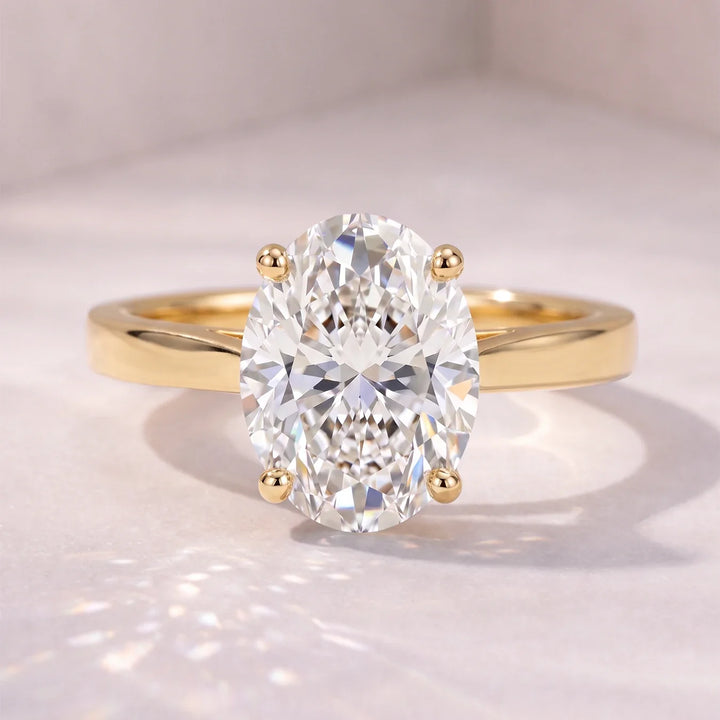
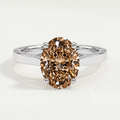
A solitaire engagement ring puts one centre stone at the heart of the design. A plain band keeps the outline easy to see, whether you choose a diamond or a coloured gemstone. Compare the shape of the claws and the thickness of the band as well as the stone itself; small changes can give two solitaires quite different proportions.
A simple band does not guarantee that every wedding band style will sit flush beside it. The basket beneath the centre stone determines how much room there is, so check the pair together.

Lulu leaves the band plain so the oval remains the focus.
Bezel Engagement Rings
A bezel setting holds the centre stone within a rim of metal instead of separate claws. The rim becomes part of the outline, so compare how much of the stone’s edge is covered and how the setting looks from the side.
A smooth rim can suit someone who prefers fewer exposed claws, but the whole design still determines how the ring wears and sits beside a wedding band. Compare our bezel engagement rings and try the intended wedding band alongside the setting.
Pavé Engagement Rings
A pavé engagement ring has small stones set closely together along the band. The detail continues beyond the centre stone, giving you more sparkle across the finger. Look at how far the stones extend around the shoulders and how the band feels against the neighbouring fingers. Pavé is one type of stone-set shoulder; compare the individual design rather than assuming every shoulder-set ring uses the same setting method.
Those small settings need care as well as the centre setting. If a stone looks loose or the band starts catching on fabric, have the ring checked before wearing it again.

Small stones run along the shoulders of Lillie Luxe.
Halo Engagement Rings
Halo engagement rings frame the centre with a ring of smaller stones. This adds width to the overall outline without increasing the size of the centre stone itself. A close-fitting halo follows its shape; a more decorative surround can give the ring a vintage-inspired feel.
Compare the full measurements of the head, not just the centre-stone size, to judge how much space the ring will take up on your hand.

On Darley, the halo outlines the blue cushion-shaped centre.
Hidden Halo Engagement Rings
A hidden halo engagement ring places its small stones beneath the centre rather than around its outline from above. The top view can look much like a solitaire, with the extra detail appearing when you turn the ring.
Look at a side photograph as well as the front view. It will show where the halo sits and how high the centre stands above the band.

This side view of Paris shows the halo beneath the centre stone.
Trilogy Engagement Rings
Trilogy engagement rings place a centre stone between two side stones. Some wearers see the three stones as past, present and future; others simply like the balance of the design. The side stones can repeat the centre's shape or introduce a different outline.
Compare the proportions of all three stones and their spread across the finger. Larger side stones create a fuller look, while smaller ones leave more emphasis on the centre.

Blossom pairs a round centre with smaller pear-shaped side stones.
Toi et Moi Engagement Rings
Toi et Moi engagement rings have two principal stones set beside one another. The name means “you and me”, though the choice of shapes and their arrangement can be entirely personal. One stone can be the larger focal point, or the two can share the attention.
Try the design on to see where each stone sits across the finger. The space between them and their angles matter as much to the finished outline as their individual sizes.

A rectangular outline sits beside a pear shape in Comet.
Cathedral Shoulder Engagement Rings
Cathedral shoulders rise from the band towards the centre setting, creating arches visible from the side. The term describes the ring's construction, so it can appear on a solitaire or a more detailed design.
Check the setting's height and the space beneath it rather than assuming every cathedral ring will fit the same way. Arches alone do not guarantee stone security; the claws, setting and condition of the whole ring still matter.

Isabella’s raised shoulders meet the centre setting.
Low-Set Engagement Rings
A low-set ring holds its centre closer to the finger. This can be appealing if you dislike a tall setting, but comfort depends on the particular ring and your routine. A lower basket may leave a gap beside a straight wedding band, so try the actual pair rather than relying on the style name. Check the band fit with our ring size guide.
Whatever the setting height, remove rings for activities that could catch, strike or put pressure on them.

Louella brings an oval centre and two small side stones into a compact three-stone design.
Compare the Styles on Your Hand
Once a few designs in the collection of engagement ring styles have caught your eye, compare their front and side views. Pay attention to the band width, setting height and wedding-band fit as well as the centre stone. Use the diamond shapes and sizes guide to compare the centre stones, then the platinum and white gold guide to compare metal care.
An in-person showroom appointment lets you compare rings on the hand. In a virtual consultation, you can discuss dimensions, photographs and the options available for a particular design.