


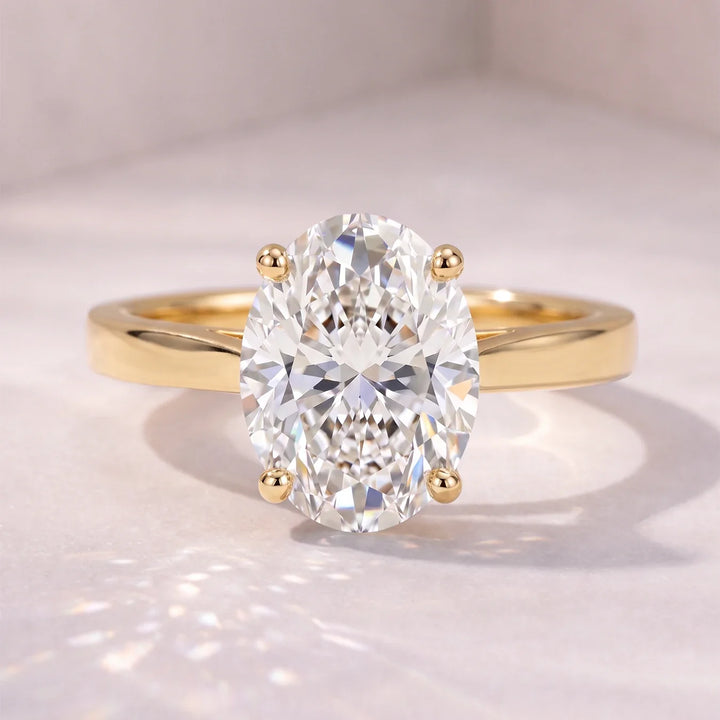


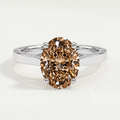


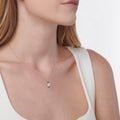



Coloured Lab Grown Diamond Engagement Rings
Coloured lab-grown diamond engagement rings bring extraordinary personality to a classic diamond centre. Explore pink, yellow, blue and green diamonds alongside champagne and deeper tones, set in platinum and gold. From refined solitaires to delicate halos and detailed shoulders, the setting frames each shade differently. Choose by the diamond's actual hue and proportions as well as its cut.


BLOSSOM
Oval Green Lab Diamond & Pear Lab Diamond 950 Platinum Trilogy Ring


LULU
Oval Pink Lab Diamond 950 Platinum Petite Solitaire


LOUELLA
Oval Green Lab Diamond 18k White Gold Trilogy Ring
LOUELLA
Oval Green Lab Diamond Platinum 950 Trilogy Ring


LOUELLA
Oval Green Lab Diamond 18k Rose Gold Trilogy Ring


LOUELLA
Oval Green Lab Diamond 18k Yellow Gold Trilogy Ring


LOUELLA
Oval Pink Lab Diamond 18k White Gold Trilogy Ring
LOUELLA
Oval Pink Lab Diamond Platinum 950 Trilogy Ring


LOUELLA
Oval Pink Lab Diamond 18k Rose Gold Trilogy Ring


LOUELLA
Oval Pink Lab Diamond 18k Yellow Gold Trilogy Ring


LOUELLA
Oval Blue Lab Diamond 18k White Gold Trilogy Ring
LOUELLA
Oval Blue Lab Diamond Platinum 950 Trilogy Ring


LOUELLA
Oval Blue Lab Diamond 18k Rose Gold Trilogy Ring


LOUELLA
Oval Blue Lab Diamond 18k Yellow Gold Trilogy Ring


LOUELLA
Oval Yellow Lab Diamond 18k White Gold Trilogy Ring
LOUELLA
Oval Yellow Lab Diamond Platinum 950 Trilogy Ring


LOUELLA
Oval Yellow Lab Diamond 18k Rose Gold Trilogy Ring


LOUELLA
Oval Yellow Lab Diamond 18k Yellow Gold Trilogy Ring


2026 Award Nominations
Award Winning Jeweller
We’re proud to be recognised consistently by the UK jewellery industry’s leading awards programmes. In 2026, Lily Arkwright has been shortlisted for Branded Boutique of the Year at the Professional Jeweller Awards and Bridal Jewellery Retailer of the Year at the UK Jewellery Awards, reflecting our continued commitment to exceptional customer service, product innovation, and ethical craftsmanship.
These latest nominations build on previous industry recognition, including being shortlisted for Bridal Jewellery Retailer of the Year at the 2025 UK Jewellery Awards and Independent Retailer of the Year at the Professional Jeweller Awards 2025. We were also finalists for Retail Team of the Year at both the Retail Jeweller Awards and Professional Jeweller Awards in 2024, recognising the passion, expertise, and dedication of our team.
We’re honoured to be recognised for helping thousands of couples find the perfect engagement rings and wedding rings, with a strong focus on choice, transparency, and personalisation. As an award-winning jeweller, we remain committed to delivering exceptional service, exceptional craftsmanship, and responsibly sourced lab-grown diamonds, moissanite, and natural diamonds, ensuring every customer can find a ring that perfectly reflects their love story.

Choosing a Coloured Lab Grown Diamond Engagement Ring
A coloured lab grown diamond gives an engagement ring a different character from a colourless centre stone. A pink lab diamond engagement ring can feel soft and romantic, while yellow lab diamond engagement rings introduce a warmer, more vivid effect. These are diamonds rather than coloured sapphires or other gemstones, but colour assessment differs from the familiar D-to-Z approach used for colourless stones.
Compare the colour in the actual setting
Look at hue, tone and saturation, not simply the colour name. A blue lab diamond engagement ring can look quite different in platinum and yellow gold; green lab diamond engagement rings offer another distinctive palette. The diamond's cut affects how its colour is distributed as well as how it handles light, so ask to see photographs or video of the precise stone, where available, and any accompanying laboratory information.
Understand what makes each coloured diamond distinctive
A coloured lab grown diamond should be judged first by the hue you enjoy, then by how consistently that colour appears across the actual stone. Some colours are more saturated, while others are delicate and change noticeably under warm indoor lighting. Ask how the colour is described on the stone's documentation and whether any post-growth treatment is disclosed. A white-metal setting can create stronger contrast, while yellow or rose gold may harmonise with warmer shades. The final choice should reflect the appearance you love, rather than a label alone.
Choose a setting that supports the centre colour. A simple solitaire creates a clean outline; a halo of white diamonds can introduce contrast. Confirm the stone's specification and any relevant colour-treatment information. For the familiar white-diamond appearance, compare our lab grown diamond engagement rings collection.

GUIDES & INSPIRATION
Coloured Lab Diamonds: More to Explore

EXPERT, QUALIFIED ADVICE
Expert Coloured Lab Diamond Ring Advice
Colour gives these lab-grown diamonds their distinctive character. Our consultants can help you compare shades, shapes and settings, including how pink, yellow, blue and green diamonds look in different metals. Some of our team are JET-qualified, while others are progressing through the National Association of Jewellers' training programme.
Talk through your preferred colour and design in our Manchester or London showroom, or arrange a virtual appointment.
Coloured Lab Grown Diamond Engagement Rings FAQs
What is the difference between coloured and white lab-grown diamonds?
Both coloured and white lab-grown diamonds are diamonds, but with coloured centres we'd pay more attention to hue, strength of colour and how evenly that colour appears. A delicate pink and a rich blue can create very different engagement rings even at the same carat weight. The cut and metal setting matter too. If you prefer the traditional colourless look, our lab-grown diamond engagement rings offer a useful comparison.
Are pink, blue and green lab-grown diamonds always colour-treated?
Not every coloured lab-grown diamond has the same treatment history. Some acquire colour during growth, while others may be treated afterwards to create or alter a shade. We'd look at the details and any identification or grading document for the actual stone rather than assume that blue, pink or green diamonds all behave alike. Our team can talk you through what is disclosed for a particular centre and how its colour looks in different lighting.
Which coloured lab diamond should I choose for an engagement ring?
We'd begin with the shade that feels most personal to the wearer. A soft pink can be understated, while a saturated blue or yellow makes a more obvious statement; champagne and brown tones bring warmth. Then we'd compare the individual stones in natural and indoor light and look at them against the precious metal. There's no single 'best' colour. The important thing is finding one you'll enjoy seeing every day.
How do coloured lab-grown diamonds compare with coloured sapphires?
A coloured lab-grown diamond is still diamond, whereas sapphire is a different gemstone made of corundum. They can sometimes offer similar hues, but their sparkle, colour character and prices can differ. We'd compare actual stones rather than choosing by colour name alone. If you're drawn particularly to blue, pink or yellow, our lab-grown sapphire rings provide another way to explore those shades in an engagement-ring setting.
How should the grading report of a coloured diamond be read?
With a coloured diamond, we'd suggest reading the identification or grading document for the exact stone. Look for the laboratory, measurements, colour description and any notes on colour origin or treatment. Reports aren't always formatted the same way, so it's important to understand what each document does and doesn't state. We'd also judge the stone in person or through reliable imagery; two diamonds with similar colour wording can look quite different in daylight.