




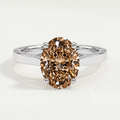


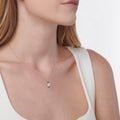



What Is Moissanite? A Beginner’s Guide
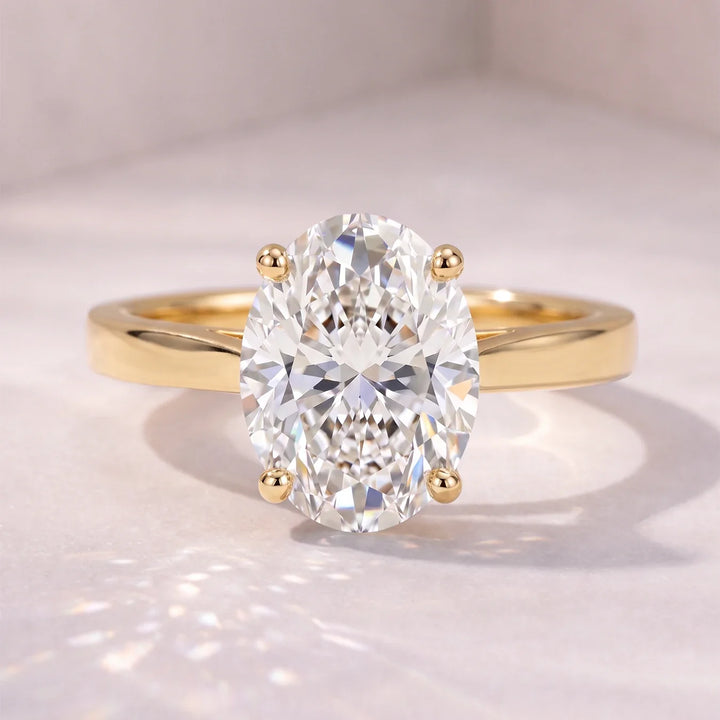
Moissanite is a gemstone made of silicon carbide. The moissanite used in jewellery is grown in a laboratory; it is a different material from diamond, with its own bright sparkle and rainbow flashes.
If you are choosing an engagement ring, the useful questions are how the stone looks to you, how it will fit into everyday life and which size feels comfortable on your hand. This guide explains the differences from natural and lab-grown diamonds, then looks at size, settings and care.
Updated 20 October 2026.
Where moissanite comes from
The name honours Henri Moissan, who discovered the mineral in a meteorite crater in 1893. Natural moissanite is extremely rare. The stones sold for jewellery are laboratory grown, rather than cut from meteorite material.
Manufacturers grow silicon carbide crystals under controlled conditions, then cut and polish them into gemstones. Laboratory growth does not guarantee a flawless stone: inclusions and variations in colour or clarity can still occur. Ask for the specification of the particular stone you are considering.
Moissanite, natural diamonds and lab-grown diamonds
Natural and lab-grown diamonds are both diamond, made of carbon. Natural diamonds form within the earth. Lab-grown diamonds are produced using high-pressure, high-temperature (HPHT) or chemical vapour deposition (CVD) methods. Moissanite is silicon carbide, so it has different optical and physical properties.
The difference you may notice most is the sparkle. Moissanite has greater dispersion than diamond: it separates light into colours more strongly, creating rainbow flashes known as fire. Its refractive index describes how it bends light; this is a separate property. Cut, size and lighting also affect what you see.
Both stones can show white sparkle and coloured flashes. If you enjoy a lively, colourful look, moissanite may appeal to you. If you prefer the appearance of diamond, a natural or lab-grown diamond may be a better fit. Try to compare similar shapes and sizes in the same lighting, including daylight and ordinary indoor light, before deciding.
GIA explains the distinction in its guide to laboratory-grown diamonds and its research on synthetic moissanite.
Is moissanite suitable for everyday wear?
Moissanite measures about 9.25 on the Mohs hardness scale, compared with diamond at 10. That makes it highly resistant to scratching. The scale is not linear, and hardness does not tell you how well a stone will withstand a knock.
A moissanite stone can still chip or break, and claws or a band can be damaged. Remove your ring for heavy lifting, gardening, contact sports and work involving chemicals. The setting matters as much as the stone when you are thinking about daily wear.
Moissanite can work well in engagement rings, wedding bands, earrings and pendants. There is no single best stone for everyone: weigh up the appearance, setting, total price and care involved. If sourcing is part of your decision, ask where and how the stone and metal were produced. Being laboratory grown does not, on its own, tell you the environmental impact of a finished ring.
 Lily Arkwright Farrah Moissanite Eternity Band
Choosing a size, shape and setting
Start with millimetres
Carat is a measure of weight, not diameter. Moissanite and diamond of the same dimensions have different weights, so a diamond-equivalent carat figure is not the moissanite's actual weight. Compare the stone's measurements in millimetres and try a similar size on your hand.
The photograph below shows how six round stones sit along one finger. It is a visual illustration, not a measured size chart: the individual dimensions have not been provided. Your finger size, the stone's shape and the setting will all affect the finished look.
 Lily Arkwright Moissanite Collection
A larger stone makes a different impression, but also deserves a closer look from the side. Check how high it sits, how it feels between your fingers and whether it works with a wedding band.
 Lily Arkwright Paris Radiant-Cut Hidden-Halo Ring
Paris design example: this photograph illustrates shape and setting. Confirm the centre stone, accent stones and millimetre dimensions separately when choosing a ring.
Look at the cut as well as the outline
A stone's outline is only part of its appearance. An emerald cut has long, stepped facets; an oval has a different facet pattern and elongated outline. The Paris emerald-cut photograph below illustrates the cut and setting only. To judge moissanite's sparkle, compare confirmed moissanite samples in motion and under the same lighting.
 Lily Arkwright Paris Emerald-Cut Hidden-Halo Ring
 Lily Arkwright Lulu Oval Moissanite Engagement Ring
For other setting and shape examples, explore Lily Arkwright Coco Moissanite Engagement Ring or Lily Arkwright Lulu Elongated Cushion Moissanite Engagement Ring .
Check the profile and fit
A front-on photograph will not tell you everything about a ring. The side view below shows the raised setting and shoulders of a solitaire. Ask how the setting protects the stone, whether a wedding band will sit alongside it and how it feels during normal hand movements.

Lily Arkwright Rosalee Moissanite Engagement Ring
If you have a particular combination of proportions and setting in mind, discuss it with the team: Lily Arkwright Bespoke Moissanite Rings .
Looking after your moissanite ring
For routine cleaning, use warm water, mild soap and a soft brush. Rinse in a bowl, away from an open plughole, and dry with a soft cloth. Build-up from hand cream and everyday wear can dull the surface appearance, so gentle cleaning can help the stone look its best.
Check the whole ring before cleaning. If a stone moves, a claw catches or the band looks damaged, have a jeweller inspect it. Ask before using an ultrasonic cleaner, especially if the ring includes other gemstones or has a loose or damaged setting. GIA's jewellery care advice explains why the materials and construction matter.
A few beginner questions
How do you pronounce moissanite?
Say MOY-san-ite, with the emphasis on “MOY”, which rhymes with “boy”.
Is moissanite a lab-grown diamond?
No. Moissanite is silicon carbide. A lab-grown diamond is carbon with the diamond crystal structure. They are distinct gemstones, even when a similar cut and colour make them look alike at first glance.
Can you identify moissanite just by looking at it?
Appearance can offer clues, but a photograph or a quick look is not a reliable identification test. If the stone's identity is uncertain, ask a suitably equipped jeweller or gemmologist to examine it.
Finding your moissanite ring
You can explore Lily Arkwright's moissanite collection online or arrange a showroom or virtual consultation. Bring a shortlist of shapes, a budget and any questions about fit or care. If you are comparing particular stones or suppliers, ask the team to confirm the current options and specifications.
Lily Arkwright Showroom Consultations
Take time to see how the ring looks when you move your hand, and how it feels to wear. The right choice is the one whose sparkle, proportions and practical details suit you.