









Lab Grown Diamond Engagement Rings
Explore lab-grown diamond engagement rings with colourless diamond centres in elegant platinum and gold settings. Choose from round, oval, emerald and other cuts, with designs ranging from refined solitaires to hidden halos and diamond-set bands. Compare each centre diamond's actual dimensions, cut and grading information to find the look you love. For a different colour-led design, discover our coloured lab-grown diamonds.


ISABELLA
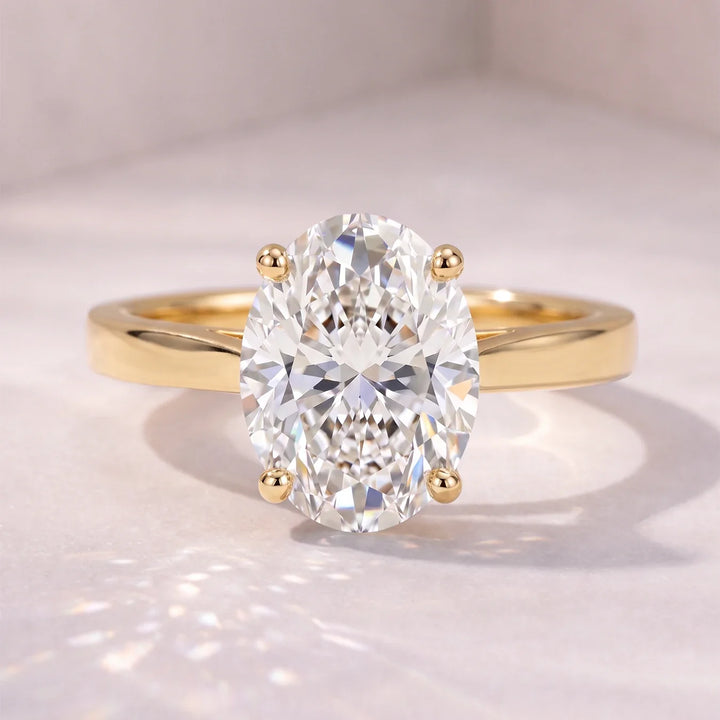
Oval Lab Diamond 18k Yellow Gold Solitaire


PARIS
Oval Lab Diamond 18k Yellow Gold Hidden Halo


EDEN
Oval Lab Diamond 18k Yellow Gold Vine Solitaire


LULU
Oval Lab Diamond 18k Yellow Gold Petite Solitaire


GRACE
Round Lab Diamond Platinum Solitaire


EDEN
Round Lab Diamond 950 Platinum Vine Solitaire Ring


PARIS
Oval Lab Diamond Platinum Hidden Halo


GRACE
Round Lab Diamond 18k Yellow Gold Solitaire Ring


LILLIE
Round Lab Diamond 950 Platinum 6 Prong Knife Edge Solitaire Ring


LOTTIE
Round Lab Diamond 4 Claw Solitaire Platinum


EDEN
Oval Lab Diamond Platinum Vine Solitaire


ANNORA
Round Lab Diamond 18k Yellow Gold Twist Solitaire Ring


EVERDEEN
Oval Lab Diamond 18k Yellow Gold Trilogy Ring


LOUELLA
Oval Lab Diamond 18k Yellow Gold Trilogy Ring


LIVELY
Radiant Lab Diamond Platinum Micro Pavé Hidden Halo


VIOLA
Oval Lab Diamond Platinum Shoulder Set


ISABELLA
Oval Lab Diamond 950 Platinum Solitaire


EDEN
Round Lab Diamond 18k Yellow Gold Vine Solitaire Ring


BLOSSOM
Oval Lab Diamond & Pear Lab Diamond 18k Yellow Gold Trilogy Ring


FLORENCE
Emerald Lab Diamond 18k Yellow Gold Solitaire


FLORENCE
Radiant Lab Diamond 18k Yellow Gold Solitaire
Choosing a Lab Grown Diamond Engagement Ring
A lab grown diamond is a real diamond with the same essential chemical composition and physical properties as a mined diamond. The difference is where it forms. When choosing one for an engagement ring, concentrate on the appearance and proportions of the individual stone rather than assuming that two diamonds with the same carat weight will look identical.
Compare cut, colour and clarity in context
Cut quality has a substantial effect on how a diamond handles light. For oval lab diamond engagement rings and other elongated shapes, review photographs or video for areas of darkness as well as the overall outline. If you prefer a more symmetrical silhouette, compare round lab diamond engagement rings. Colour and clarity grades are useful, but their visual importance varies with the cut, stone size and setting. Ask to see the grading document for the precise diamond selected; reporting language can differ between laboratories and report types.
Match the diamond to the ring
A lab diamond solitaire ring keeps the focus on the centre stone, while a hidden halo setting adds subtle detail beneath it. For extra sparkle along the band, compare lab diamond shoulder set rings. Check the setting's height, band width and profile if you plan to wear a straight wedding ring. For those who prefer a coloured centre stone, our coloured lab grown diamond engagement rings form a separate collection.
Know what the grading report does and does not tell you
A grading report is an important starting point, but two lab grown diamonds with similar colour and clarity grades can still look noticeably different. Pay particular attention to cut, measurements and how the individual stone behaves in natural and indoor light. For fancy shapes, photographs or video can be especially helpful because the report alone cannot show every aspect of their appearance.
For the most confident choice, compare complete rings with the same diamond specification, not headline carat prices in isolation. If you prefer a finer overall look, petite lab diamond engagement rings are worth comparing with broader settings. Our consultants can explain the report and show how different cuts and settings look on the hand.
2026 Award Nominations
Award Winning Jeweller
We’re proud to be recognised consistently by the UK jewellery industry’s leading awards programmes. In 2026, Lily Arkwright has been shortlisted for Branded Boutique of the Year at the Professional Jeweller Awards and Bridal Jewellery Retailer of the Year at the UK Jewellery Awards, reflecting our continued commitment to exceptional customer service, product innovation, and ethical craftsmanship.
These latest nominations build on previous industry recognition, including being shortlisted for Bridal Jewellery Retailer of the Year at the 2025 UK Jewellery Awards and Independent Retailer of the Year at the Professional Jeweller Awards 2025. We were also finalists for Retail Team of the Year at both the Retail Jeweller Awards and Professional Jeweller Awards in 2024, recognising the passion, expertise, and dedication of our team.
We’re honoured to be recognised for helping thousands of couples find the perfect engagement rings and wedding rings, with a strong focus on choice, transparency, and personalisation. As an award-winning jeweller, we remain committed to delivering exceptional service, exceptional craftsmanship, and responsibly sourced lab-grown diamonds, moissanite, and natural diamonds, ensuring every customer can find a ring that perfectly reflects their love story.

Lab Grown Diamond Engagement Rings FAQs
Are lab-grown diamonds real diamonds, or are they like moissanite?
Yes, lab-grown diamonds are real diamonds, with essentially the same chemical composition and crystal structure as natural diamonds. The distinction is where they form: in a controlled laboratory environment rather than deep within the earth. Moissanite is another gemstone entirely, and its particularly lively rainbow-coloured flashes can give it a different look. Neither comparison has to be complicated; we can show you what to look for in the chosen centre stone and explain how each option affects the finished ring.
Which lab-grown diamond colour and clarity grades are worth paying more for?
The best value often lies in choosing grades that look beautiful in the actual stone, rather than automatically paying for the highest figures on a report. We'd start with cut, proportions and overall appearance, then consider whether a change in colour or clarity would be noticeable at your preferred size. For example, upgrading an already eye-clean diamond may make less visual difference than improving its cut. Our consultants can help you compare individual stones, reports and metal choices so your budget goes towards details you'll genuinely appreciate.
How much larger does a two-carat lab-grown diamond look than a one-carat diamond?
Two carats will look noticeably more substantial, but the diamond won't be twice as wide. For similar-proportioned round brilliant diamonds, the diameter of a two-carat stone is often about a quarter larger than that of a one-carat stone. Elongated shapes can give a different impression, so a comparison using millimetres is more reliable than carat weight alone. We recommend looking at the stones on a hand and considering the band's width too. You'll find further examples in our diamond carat size guide.
Which certificate should I check when choosing a lab-grown diamond?
We'd suggest looking at the grading or identification report for the specific diamond you've selected. Its measurements, report number, assessed characteristics and any comments help you understand what you're buying. IGI and GIA use different formats and may report laboratory-grown diamonds in different ways, so the key is to understand the actual information supplied rather than comparing labels without context. We're happy to explain the report alongside the stone and answer any questions about the grading.
Why do two similar-sized lab-grown diamond rings have different prices?
Even when the centre diamonds appear much the same size, their cut, proportions and other assessed characteristics may differ. The finished ring matters too: a slender solitaire, a hidden halo and a design with diamond-set shoulders all involve different amounts of metal and setting work. We'd recommend comparing the complete configurations, including any upgrades, before deciding which offers the best value for you. If you're weighing up origins as well, our natural diamond engagement rings provide a useful point of comparison.
Are coloured lab-grown diamonds the same as white lab diamonds?
They are both diamonds, but the qualities you consider when choosing them can be quite different. With a coloured centre, the exact hue, strength and evenness of the colour are often part of what makes it appealing. The shade may arise during laboratory growth or be influenced by subsequent treatment, so we'd look at the details of the individual stone. Our coloured lab-grown diamond engagement rings let you explore options from delicate pastels to deeper tones and see how they work with different precious metals.
Need help choosing your jewellery?
Our jewellery specialists would be delighted to help you compare designs at our London or Manchester showrooms, or in a virtual consultation.