


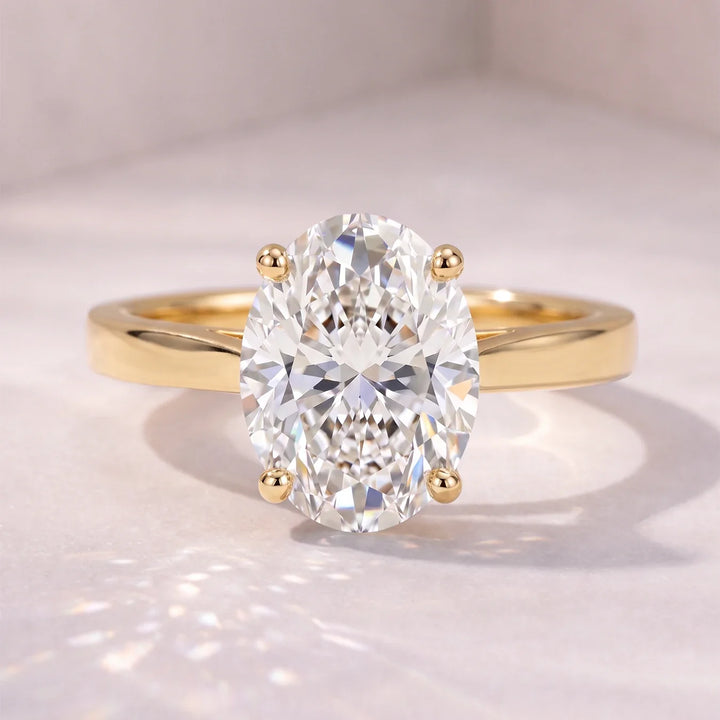







A guide to coloured lab-grown diamonds
Updated 18 November 2026
A lab-grown diamond’s colour can develop as it grows or be introduced or changed afterwards. Before choosing one, compare its face-up shade in different lighting and read the individual report for any treatment disclosures. “Lab-grown” tells you how the diamond formed, not whether its colour is untreated.
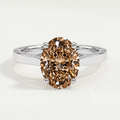
Whether you love a barely-there pink or a stronger yellow, our coloured lab-grown diamond rings are a place to start. Look closely at the individual stone and setting: the shade you enjoy wearing matters more than a colour name alone.
If pink is on your shortlist, our pink diamond prices and settings guide gives dated complete-ring examples. For background on how colours arise, read fancy coloured diamonds explained.
What is a coloured lab-grown diamond?
It is diamond grown in a controlled environment, with colour as part of its appearance. Lab-grown diamonds have essentially the same chemical composition, crystal structure and physical properties as natural diamonds. They are a different material from moissanite, sapphire, ruby or emerald, even when the colours look similar.
Choosing the shade
Look first at the colour you actually see. Is the pink soft and pale, or stronger and brighter? Does the yellow lean towards a light lemon shade or a deeper golden tone? A second colour can influence the overall impression too, so two stones described simply as pink may look quite different.
Laboratories describe colour more precisely through hue, tone and saturation: the colour itself, how light or dark it appears, and its strength. Terms such as Fancy Intense and Fancy Vivid belong to a grading vocabulary. A shop’s colour label or a photograph is not enough to assign one of those grades.
View the diamond face-up and move it slowly. Notice whether the colour looks even, whether some areas seem darker, and whether you still like it away from the strongest lighting. Ask to see it in ordinary indoor light and daylight, where practical. A screen is a useful starting point, but brightness settings and photography can change your impression.

Read the report for the stone you are buying
Ask for the report before settling on a diamond. Check that its number and measurements match the stone offered, and read the identification, colour description and comments. Look specifically for information about laboratory-grown origin and any post-growth treatment. If the report leaves something unclear, ask for an explanation in plain language.
Report names matter. GIA’s colour-identification report for lab-grown diamonds describes the colour and its distribution, and assesses growth type and post-growth treatment. Its full Laboratory-Grown Colored Diamond Report also provides a full quality assessment and a plotted clarity diagram. Check which service your document covers; our guide to IGI and GIA reports can help you understand what you have been given.
A report describes the diamond. It cannot decide whether you love the shade, and it is not a promise about future resale value. Natural fancy-colour diamonds have a different market: their rarity and auction prices should not be used to imply that a lab-grown stone has the same value.
Choosing a setting that suits the colour
Try the colour beside the metal you intend to wear. Rose or yellow gold may make a combination feel warmer, while platinum or white gold can create a clearer contrast. There is no rule that a pink stone needs rose gold or a yellow stone needs yellow gold. Look at the complete ring and trust the combination you prefer.
The outline matters as well. An oval has rounded ends; a marquise brings sharper points and a more elongated shape. Compare measurements as well as carat weight, especially if you are choosing between shapes. For an everyday ring, also consider the height of the setting and how exposed the edges of the stone are.
Use the diamond shapes and sizes guide to compare weight with measurements, and the ring styles and settings guide to check how the design works around the stone.

Coloured Lab-Grown Diamonds: A Closer Look
Discover the beauty and individuality of coloured lab-grown diamonds in our video guide. From delicate pinks and vibrant yellows to striking blues and greens, explore how different colours, diamond shapes and precious metal settings can create a distinctive engagement ring. For further inspiration, watch our Coloured Lab Grown Diamond video below:
Before you make the final choice
Ask whether the images show the actual diamond available or an example of the design. Confirm the centre stone, any smaller stones, metal, ring size and total price together. If you want a particular shade, make that part of the conversation early: choosing “pink” from a menu is not the same as approving a specific pink diamond.
It can help to shortlist two or three combinations and give each a little time. Compare the same views, rather than a close-up of one ring against a distant hand photograph of another. If you would like help narrowing them down, book an appointment and bring the colours and designs that have caught your eye.
Will a coloured lab-grown diamond fade?
Many common colour treatments, including high-pressure, high-temperature (HPHT) treatment and irradiation followed by controlled heating, are stable during normal wear. Surface coatings are different: they can scratch or wear off. Ask which treatment, if any, was used on your stone and follow its care advice. Before a repair, give those details to the jeweller, as heat can affect some treated colours.