


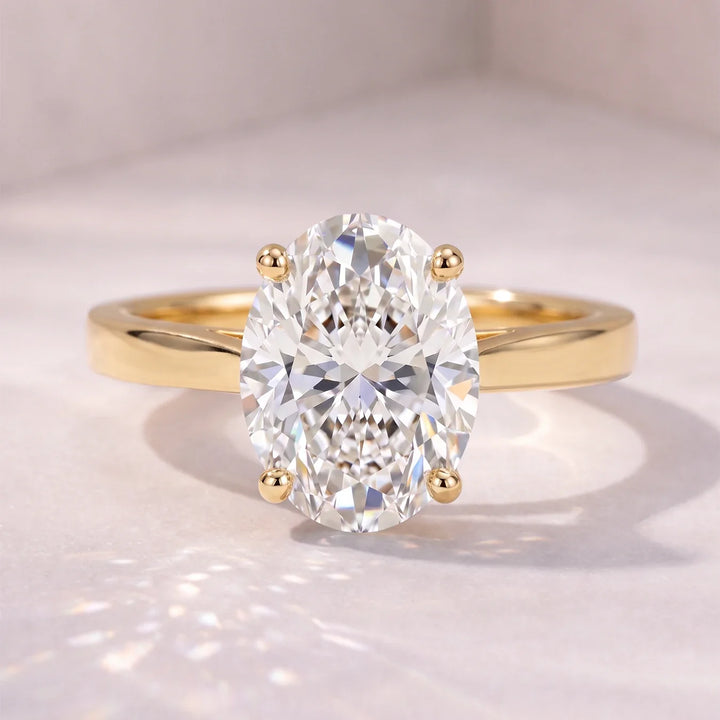


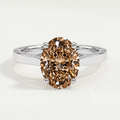


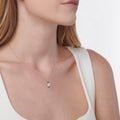



Create Your Own Natural Diamond Engagement Ring
Updated 18 November 2026
Building your own natural diamond engagement ring starts with two choices: the diamond and the setting around it. You might already have a shape in mind, or you might want to try a few styles before deciding. Either way, a clear budget and a little time spent comparing individual stones will help you narrow the options.
This guide takes you through the choices, from reading a diamond report to checking how the finished ring will sit on your hand. If you are still exploring engagement rings, start by noticing which shapes and settings you keep coming back to.
If you are still deciding on origin, compare lab-grown and natural diamonds before choosing a particular stone.

Start with a budget and a shortlist
Set a budget for the complete ring, including the setting, rather than spending it all on the centre stone. Decide what matters most to you: the outline of a particular shape, how much of the finger the stone covers, a plain band or detail along the shoulders. You do not need the highest grade in every category to find a ring you enjoy wearing.
Our natural diamond engagement ring collection is a useful starting point. You can compare solitaires with hidden-halo settings, or browse the wider range of designs before looking more closely at a particular ring. Check the options offered for your chosen setting; not every diamond shape or size will suit every mount.
Look beyond the grades on the report
A grading report helps you compare diamonds, but it cannot tell you everything about how a stone will look. Use it alongside photographs, video or an appointment to see the differences for yourself.
Our guide to diamond cut, colour, clarity and carat weight helps you set priorities; the shapes and sizes guide explains why measurements matter alongside carat weight.
- Carat weight and measurements: carat measures weight. Compare the stone’s length and width as well, particularly when looking at different shapes.
- Colour: compare the diamond alongside your preferred metal. The setting can affect how noticeable a warm tint appears.
- Clarity: ask whether any inclusions can be seen without magnification. Their size and position matter as well as the grade.
- Cut: for a standard round brilliant diamond in the D–Z colour range, GIA’s overall cut grade is useful. GIA does not give that same overall cut grade to fancy shapes such as ovals or emerald cuts, so look at their proportions and appearance. Polish and symmetry are separate report entries.
Fluorescence describes a diamond’s response to ultraviolet light. It does not automatically mean that the stone will look cloudy. Ask how the individual diamond looks in ordinary lighting rather than ruling it in or out on that one detail.
Our guide to IGI and GIA diamond reports explains what the laboratories record. If you have two or three stones in mind, our jewellery consultants can help you work through the differences.
Choose a setting that suits the way you wear it
Look at the ring from the side as well as from above. The height of the centre, the shape of the shoulders and the space beneath the setting all affect how it sits. If you plan to wear a wedding band beside it, try the two together or ask which band shapes will fit.

A plain solitaire keeps attention on the centre stone. For an oval, compare Isabella with Paris, which adds a hidden halo beneath the centre. If you prefer an emerald cut, Florence and Lulu offer two settings to compare around that longer, straight-sided shape.
For a round diamond, look at how Lottie and Annora frame the same shape differently. Small changes to the band and claws can make a ring feel quite different on the hand.

Check the complete ring before ordering
Once you have a favourite, confirm the diamond’s report and measurements, the metal, the ring size and the total price. Ask about the expected delivery date and check the delivery and returns terms and resizing conditions for that particular order. It is also worth checking how the chosen stone will sit in the setting, especially if you have compared photographs of different carat weights.
You can discuss your shortlist through a virtual consultation or at an in-person showroom appointment. Bring the product details and any questions you have; a comparison is often easier when you can point to the two options you are deciding between.
When a bespoke design makes sense
If the available settings do not offer the combination you have in mind, our bespoke ring service is a separate route to explore. You might want a different band profile or a particular arrangement of stones. The team can discuss what is practical before you commit to a design.
Our guide to designing an engagement ring explains that process in more detail. For an existing design, start with the collection and take the time to compare the stone, the setting and how the two work together.