









Updated: 18 November 2026
January 26, 2021
Engagement & Wedding Ring Band Profiles
Choosing a ring band that feels right
When choosing an engagement ring or wedding band, pay attention to the metal that sits against your finger as well as the stone. The band’s profile, width and thickness all affect how it feels. Two rings in the same size can feel surprisingly different, so try on the profile and width you are considering.
What is a band profile?
A band profile is the shape of the metal in cross-section. The outside may be flat, domed or ridged, while the inside can be flat or curved. Width is the distance across the band; thickness is how far it stands out from the finger. Check those measurements separately, because the profile name does not tell you how substantial the ring will feel.
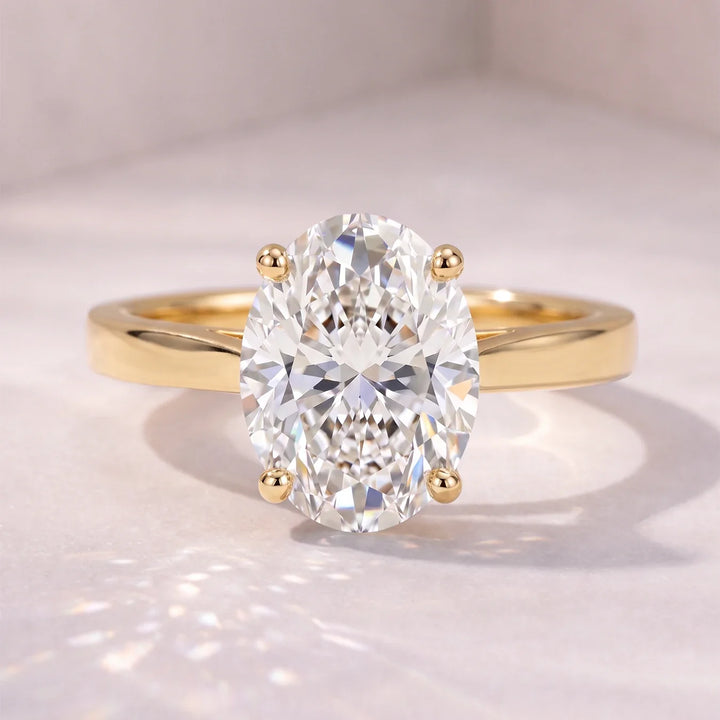
The Grace solitaire worn on a hand. This view shows the overall proportions; a side view is more useful for inspecting the band profile.
Knife edge
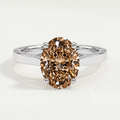
A knife-edge band has two sloping outer faces that meet along a central ridge. The ridge gives the metal a more angular appearance, but it does not change the centre stone’s size. Try it on and notice how it feels against your neighbouring fingers; the sharpness of the ridge varies between designs. When comparing solitaires such as the Grace, ask to see the band’s cross-section rather than inferring it from an on-hand photograph.
D-Shaped
A D-shaped band has a flat inner face and a domed outer face, like the letter D in cross-section. It gives a rounded appearance from above. Compare the depth of the dome as well as the width, since both affect how prominent the band feels.
Flat
A flat profile has flat inner and outer faces, giving the band a straight-sided appearance. It is not necessarily bulkier than a curved profile: that depends on its width, thickness and edge finish. Try bending your fingers with the ring on to see how the edges feel.
Comfort Fit Bands
Comfort fit describes a curved inner surface rather than one particular outer shape. That curve may help the band slide over the knuckle, but the name is not a guarantee of comfort.
Regular Court
A regular court band is curved on both the inside and outside. It has a rounded appearance and a curved surface against the finger. Compare it with a D-shaped band in a similar width to judge whether you prefer the difference in fit.
Flat Court
A flat court band combines a flat outer face with a curved inner face. It offers the appearance of a flat band with a different feel against the finger. It is not automatically thinner than a flat profile, so compare the actual measurements rather than relying on the name.
Tapered Bands
Taper describes a change in band width along the ring, rather than its cross-section. A band can therefore be tapered and have a court or knife-edge profile. On an engagement ring, shoulders that narrow towards the centre can draw the eye towards the stone. When comparing solitaires such as the Lottie, ask whether the width stays the same throughout. For a tapered design, compare the narrowest width with the width beneath the finger.
Hallmarking
A hallmark verifies precious-metal content through independent testing. In the UK, compulsory hallmarking applies above the relevant metal’s exemption weight. It does not certify a gemstone’s grade, its origin or the overall quality of the finished ring.
Our article on hallmarking and jewellery standards explains more. When choosing a band, check the metal and fineness in its specification separately from the shape, width and finish.
Wed-Fit Rings
A wed-fit engagement ring is designed to leave room for a wedding ring or eternity band alongside it. A raised centre setting may provide that clearance, but a flush fit depends on both rings: the wedding band’s width and height matter as well as the engagement ring’s setting.
Try the two together and check whether the metal or stones rub against each other. A low setting or projecting basket may suit a shaped band, or you may simply like a small gap. If you need a particular contour, our bespoke design service can help you discuss the options. Confirm the proposed fit before ordering.
Pavé and channel-set shoulders
Small stones along a ring’s shoulders add detail to the band. Their setting is separate from the band profile: a stone-set ring can still have a flat, curved or tapered shape.
In pavé settings, small beads or claws of metal hold the stones close together. The Giselle shows how stone-set shoulders lead towards the centre. The additional stones bring sparkle to the band; they do not guarantee a brighter centre stone.
Check the materials and grades for the specific ring rather than assuming every shoulder-set design uses the same stones. Small settings also need care: ask about inspections and maintenance, and have a loose stone or damaged setting checked before wearing the ring again.
A side view of the Giselle, showing its raised centre setting and smaller stones along the shoulders.
Channel Setting
A channel setting holds a row of stones between two parallel metal edges. It gives the band a defined outline, but it is not automatically snag-free or more durable than every pavé design. The construction, finish and condition of the ring all matter.
Look closely at how the stones are secured. The Harper eternity band is described as grain set: small beads of metal hold the diamonds within the band. A row bordered by metal is not always a conventional channel setting, so check the specification and close-up views.
Choosing with Lily Arkwright
If you are deciding between profiles, ask the team to compare the width, thickness and inner curve of your shortlisted rings. Bring your engagement ring when trying on a wedding band so that you can assess the pair together.
For other jewellery to wear with your rings, you can compare the designs and metal colours in our earrings and pendants collections.
Contact hello@lilyarkwright.com with any questions, or read customer reviews on Trustpilot.
Related guides
Our guide to moissanite
Our guide to lab-grown diamonds
Our guide to coloured gemstones
Have you found a band profile you particularly like wearing? Share your thoughts in the comments below.