









Your Guide to Diamond Shapes and Cuts
Updated 16 November 2026
When choosing an engagement ring, start with the outline you enjoy looking at: round, oval, angular or softly rounded. Then look at how the stone handles light. Shape describes its outline; cut also concerns the facets and proportions that affect its appearance. Two stones with the same shape and carat weight can look quite different. The photographs below show these outlines in Lily Arkwright ring settings.

1. Round Brilliant Cut
The round brilliant cut has a circular outline and a pattern of facets designed to return light through the top of the stone. A standard round brilliant has 57 facets, or 58 when a small flat facet called a culet is present at the base. Facet count alone does not tell you how well it will sparkle: the proportions and finish matter too.

Lily Arkwright Lillie Round Ring
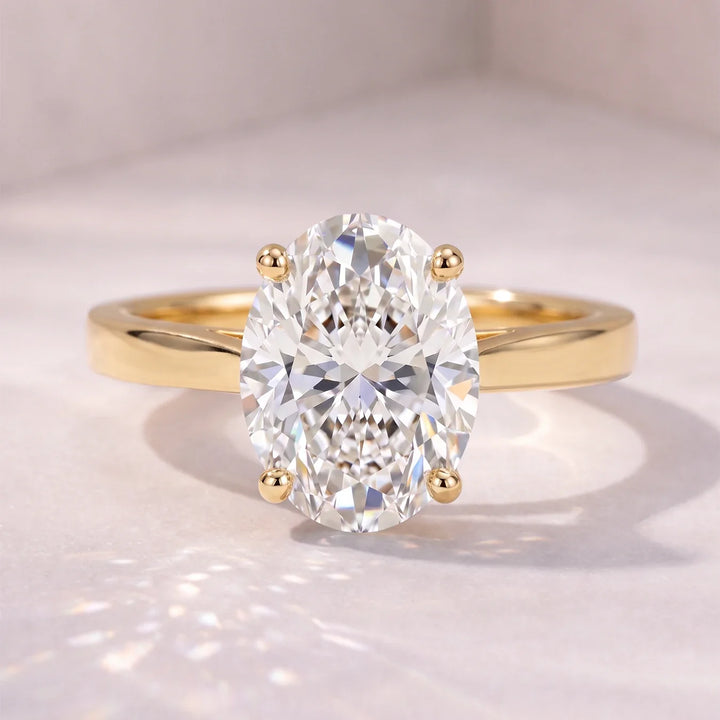
2. Oval Cut
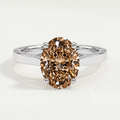
An oval cut keeps a rounded outline but stretches it along the finger. Some ovals are quite broad; others are longer and narrower. Compare their measurements rather than relying on carat weight alone, and move each stone in the light to see how its reflections change. The simple setting pictured leaves the outline easy to see.

Lily Arkwright Oval Cut Collection
3. Princess Cut
The princess cut has a square outline, pointed corners and a brilliant-style facet pattern. It gives a sharper, more angular look than a round or cushion. Those corners need protection from the setting. If you are comparing prices with a round diamond, compare the individual stones’ quality and dimensions as well as their weight.

Lily Arkwright Princess Cut Collection
4. Emerald Cut
If you like vintage designs, the emerald cut is worth trying. Its rectangular outline, clipped corners and broad step-like facets produce longer flashes of light than the smaller reflections of a brilliant cut. That open appearance can make inclusions easier to notice. A step-cut outline does not guarantee a high clarity grade, so inspect the particular stone.

Lily Arkwright Emerald Cut Collection
5. Cushion Cut
A cushion cut has a square or rectangular outline with softly curved sides and rounded corners. The facet pattern varies between stones: some show broad flashes, while others have a more broken-up sparkle. A halo, as pictured, changes the overall outline of the ring, so compare the centre stone on its own as well as the finished setting.

Lily Arkwright Cushion Cut Collection
6. Elongated Cushion Cut
An elongated cushion has the same softened corners as a squarer cushion, with a longer outline. There is no single proportion that suits everyone. Try a broader version alongside a narrower one, and check the length and width in millimetres to understand what you are comparing.

Lily Arkwright Elongated Cushion Collection
7. Marquise Cut
The marquise cut has curved sides that narrow to a point at each end. Its length can make it look larger from above than a more compact stone of the same weight. Compare its length and width in millimetres, and choose a setting that protects both tips. You can also see this outline in Selena Gomez’s engagement ring.

Lily Arkwright Marquise Cut Ring
8. Pear Cut
The pear shape brings a rounded end and a pointed tip together in a teardrop outline. Look at the balance of the two sides and whether you prefer a broad or slender shape. The point needs protection, while a halo, like the one shown here, gives the ring a fuller outline.

Lily Arkwright Pear Cut Collection
9. Heart Cut
A heart cut has two rounded lobes, a cleft between them and a pointed base. The balance of these features makes the shape recognisable. Look at it at normal viewing distance as well as close up; the setting and any surrounding halo can change how clearly you see the outline.

Lily Arkwright Bespoke Heart Shaped Engagement Ring
10. Radiant Cut
A radiant cut has a square or rectangular outline with clipped corners, but its brilliant-style facets create a different pattern of sparkle from an emerald cut. Compare the two side by side if you like an angular shape. Clipped corners remove the sharp points of a princess cut, but do not make the stone immune to damage.

Lily Arkwright Radiant Cut Collection
11. Asscher Cut
The Asscher cut shares the emerald cut’s step-like facets, arranged within a squarer outline with clipped corners. Viewed from above, those facets create a series of nested shapes. As with an emerald cut, the open pattern can make inclusions more noticeable; choose by the appearance of the individual stone, not the name alone.

Lily Arkwright Asscher Cut Collection
12. Baguette Cut
A baguette cut is usually a narrow rectangle with step-cut facets. Baguettes often sit beside a centre stone or form a pattern around a band. The ring pictured shows how these rectangular stones can sit across the top of a band.

Lily Arkwright's Lovetta Baguette Cut Natural Diamond Engagement Ring
Compare your two or three favourite shapes on your hand. Check their measurements, look at them in more than one light and consider how the setting protects any pointed corners. A photograph can help you choose a style, but it cannot tell you exactly how a particular stone will look in person.