









The 4Cs of Diamonds: Colour, Clarity, Cut and Carat
Updated 12 November 2026
The 4Cs describe four different things about a diamond: colour, clarity, cut and carat weight. They help you compare natural and lab grown diamonds, but they do not choose a ring for you. Read the report, look at the actual stone and decide which differences matter to your eye and your budget.
Colour
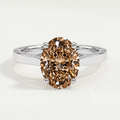
For diamonds in the D-to-Z range, colour grading describes the amount of body colour, usually yellow or brown. D is the colourless end of the scale; the letters continue to Z as colour becomes more noticeable. Grading for fancy coloured diamonds follows a different approach.
Compare stones in similar lighting. The ring’s metal and setting can affect the impression of colour, and a difference that is clear to a grader may be less noticeable when you wear the ring. If two stones look equally appealing to you, a higher colour grade may not be where you want to spend more.

Colour illustration only; screen settings and lighting make this unsuitable for grading a diamond.
Clarity
Clarity describes internal inclusions and surface blemishes, which can occur in both natural and lab-grown diamonds. On the conventional GIA clarity scale, Flawless means neither is visible to a skilled grader at 10× magnification. Internally Flawless allows surface blemishes. The scale continues through VVS, VS and SI to the Included grades.
The grade is useful, but it does not tell you everything about what you will see without magnification. An inclusion’s size, position and visibility matter. Look at the individual stone face-on at a normal viewing distance, rather than assuming every diamond with the same clarity grade will look identical.

Two close-up diamond photographs illustrating differences in visible clarity characteristics. A photograph alone cannot establish a clarity grade.
Cut
Cut quality describes how a diamond’s proportions and finish affect its interaction with light. Shape describes the outline, such as round, oval or pear. For a closer look at those outlines, see our handy guide to all different diamond shapes.
GIA’s conventional overall cut grade applies to standard round brilliant diamonds in the D-to-Z colour range. Other shapes and reports do not necessarily carry an equivalent overall grade. Use the report alongside a clear view of the diamond, moving it gently to see the pattern of bright and dark areas.
Check which laboratory issued the report and when. Since 1 October 2025, GIA’s D-to-Z laboratory-grown diamond quality assessments use the overall descriptions Premium or Standard. IGI continues to report the 4Cs for lab-grown and natural diamonds. An older GIA report can therefore look different from a newer assessment; the formats should not be treated as interchangeable grades. Our guide explains more: IGI vs GIA: Diamond Certification Explained.

Schematic profiles illustrate the concept of cut quality, not a grading test based on a side view.
Carat
Carat measures weight: 1 carat equals 0.2 grams. It is not a measurement across the top of the stone. Two diamonds of equal weight can have different length and width, so compare their millimetre dimensions as well.
A diamond just below a round-number weight may cost less, but compare its cut, colour, clarity and measurements before deciding it offers better value. For help thinking about scale on the hand, read Which Carat Diamond is the Best?
The useful question is how the diamond looks in the ring you want to wear. A larger weight is not automatically the better choice if you prefer the proportions of a smaller stone.

Credit: GIA. Illustrative carat weights and diameters; actual measurements vary with the individual diamond’s proportions.
Ready to Start Shopping?
Choose a few stones that fit your budget and compare them under similar lighting. Start with what you can see, then use the reports to understand the differences.
Our dedicated consultancy team are on hand if you would like help comparing stones or understanding their reports.
You can explore natural diamonds and lab-grown diamonds with those preferences in mind. Check the complete ring specification, including the setting, before making your choice.