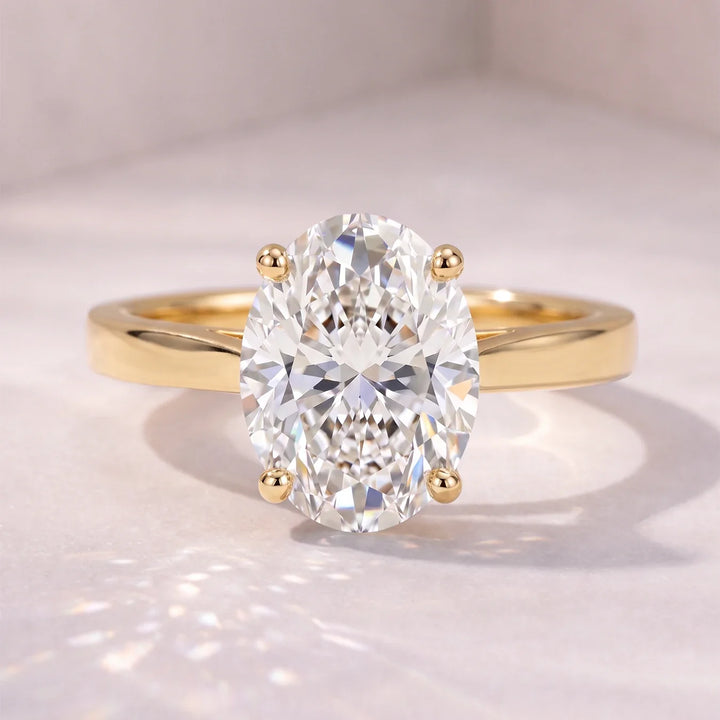
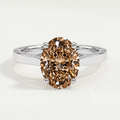
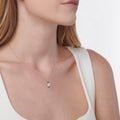
Choosing your lab grown diamond engagement ring

Understand the diamond at the centre

A lab grown diamond is a diamond grown in a controlled environment, with the same essential chemical composition and crystal structure as a natural diamond. It is not moissanite or another diamond simulant. Laboratory-grown origin does not make every diamond identical: compare the individual stone's appearance and report alongside its setting.

Find your preferred shape and setting

Round lab diamond rings offer a balanced outline, while oval lab diamond rings introduce softly elongated curves. For straighter lines and step-cut facets, explore emerald-cut lab diamond rings; for a longer outline with rounded corners, compare elongated cushion lab diamond rings.

A lab diamond solitaire keeps the centre in focus. Lab diamond halo rings add a visible frame, while a hidden halo introduces detail beneath the centre. Shoulder-set diamonds and trilogy designs create different compositions. Look at the full setting from above and from the side.

Compare carat weight, appearance and reports

Carat measures weight, not visible size. Compare the diamond's length and width in millimetres, its proportions and its appearance in photographs or video. More weight alone does not guarantee more sparkle, and a clarity grade cannot by itself establish whether inclusions will be visible to you.

Read the actual document for your chosen diamond. Check the issuing laboratory, report number, date, dimensions and any disclosed growth or treatment information. IGI reports and GIA assessments can use different terminology, so do not assume every document follows the same format. Our lab grown diamond guide provides a fuller introduction.

Choose the metal and plan the complete ring

Platinum and white gold lab diamond rings provide a pale frame; yellow and rose gold bring warmer tones. Compare the band width, claws and setting height, then check how your preferred wedding band sits alongside the design.

Compare current complete-ring prices with the same centre specification, metal and setting. Confirm ring size, the options available for your chosen design and expected timing before ordering. For a different design direction, explore our bespoke ring service, or arrange a consultation at our London showroom or Manchester showroom.

Compare a solitaire with a hidden halo

2026 Award Nominations

Award Winning Jeweller

We’re proud to be recognised consistently by the UK jewellery industry’s leading awards programmes. In 2026, Lily Arkwright has been shortlisted for Branded Boutique of the Year at the Professional Jeweller Awards and Bridal Jewellery Retailer of the Year at the UK Jewellery Awards, reflecting our continued commitment to exceptional customer service, product innovation, and ethical craftsmanship.

These latest nominations build on previous industry recognition, including being shortlisted for Bridal Jewellery Retailer of the Year at the 2025 UK Jewellery Awards and Independent Retailer of the Year at the Professional Jeweller Awards 2025. We were also finalists for Retail Team of the Year at both the Retail Jeweller Awards and Professional Jeweller Awards in 2024, recognising the passion, expertise, and dedication of our team.

We’re honoured to be recognised for helping thousands of couples find the perfect engagement rings and wedding rings, with a strong focus on choice, transparency, and personalisation. As an award-winning jeweller, we remain committed to delivering exceptional service, exceptional craftsmanship, and responsibly sourced lab-grown diamonds, moissanite, and natural diamonds, ensuring every customer can find a ring that perfectly reflects their love story.

We are passionate about supporting good causes that make the world a better place

Giving Back

Social Champions

Social Champions

At Lily Arkwright, Community Matters Lily Arkwright’s roots lie in leafy Didsbury, Manchester. While we have grown into one of the UK’s leading fi...

Read more
Lily Arkwright Supports Unicef

Supporting Unicef

This year marks Lily Arkwright's 5th year of supporting Unicef during Black Friday building upon our successful 2019 Unicef Halloween Ball partne...

Read more
Lily Arkwright Supports Global Witness

Global Witness

Global Witness brings together the issues of human rights, corruption, the trade in natural resources, the role of banks, the arms trade, conflic...

Read more

Lab Grown Diamond Engagement Rings FAQs

Are lab-grown diamonds real diamonds, or are they like moissanite?

Yes, lab-grown diamonds are real diamonds, with essentially the same chemical composition and crystal structure as natural diamonds. The distinction is where they form: in a controlled laboratory environment rather than deep within the earth. Moissanite is another gemstone entirely, and its particularly lively rainbow-coloured flashes can give it a different look. Neither comparison has to be complicated; we can show you what to look for in the chosen centre stone and explain how each option affects the finished ring.

Which lab-grown diamond colour and clarity grades are worth paying more for?

The best value often lies in choosing grades that look beautiful in the actual stone, rather than automatically paying for the highest figures on a report. We'd start with cut, proportions and overall appearance, then consider whether a change in colour or clarity would be noticeable at your preferred size. For example, upgrading an already eye-clean diamond may make less visual difference than improving its cut. Our consultants can help you compare individual stones, reports and metal choices so your budget goes towards details you'll genuinely appreciate.

How much larger does a two-carat lab-grown diamond look than a one-carat diamond?

Two carats will look noticeably more substantial, but the diamond won't be twice as wide. For similar-proportioned round brilliant diamonds, the diameter of a two-carat stone is often about a quarter larger than that of a one-carat stone. Elongated shapes can give a different impression, so a comparison using millimetres is more reliable than carat weight alone. We recommend looking at the stones on a hand and considering the band's width too. You'll find further examples in our diamond carat size guide.

Which certificate should I check when choosing a lab-grown diamond?

We'd suggest looking at the grading or identification report for the specific diamond you've selected. Its measurements, report number, assessed characteristics and any comments help you understand what you're buying. IGI and GIA use different formats and may report laboratory-grown diamonds in different ways, so the key is to understand the actual information supplied rather than comparing labels without context. We're happy to explain the report alongside the stone and answer any questions about the grading.

Why do two similar-sized lab-grown diamond rings have different prices?

Even when the centre diamonds appear much the same size, their cut, proportions and other assessed characteristics may differ. The finished ring matters too: a slender solitaire, a hidden halo and a design with diamond-set shoulders all involve different amounts of metal and setting work. We'd recommend comparing the complete configurations, including any upgrades, before deciding which offers the best value for you. If you're weighing up origins as well, our natural diamond engagement rings provide a useful point of comparison.

Are coloured lab-grown diamonds the same as white lab diamonds?

They are both diamonds, but the qualities you consider when choosing them can be quite different. With a coloured centre, the exact hue, strength and evenness of the colour are often part of what makes it appealing. The shade may arise during laboratory growth or be influenced by subsequent treatment, so we'd look at the details of the individual stone. Our coloured lab-grown diamond engagement rings let you explore options from delicate pastels to deeper tones and see how they work with different precious metals.

Need help choosing your jewellery?

Our jewellery specialists would be delighted to help you compare designs at our London or Manchester showrooms, or in a virtual consultation.

Book an appointment