







What Makes Blue Diamonds So Rare?
Blue diamonds are among the most captivating and mysterious stones in the world. Deep, cool and utterly distinctive, they have fascinated collectors and royalty for centuries, and a blue diamond engagement ring makes a statement few other stones can match. But what actually makes them so rare, and how has it become possible to own one without a collector's budget? Below we explain what a blue diamond is, why nature produces so few of them, and how lab grown diamonds have changed the picture.
What Is a Blue Diamond?
A blue diamond is a real diamond with a natural blue body colour, ranging from a soft, pale sky blue through to a deep, dramatic ocean blue. Like every diamond it scores a perfect 10 on the Mohs hardness scale, so it is just as tough and wearable as a white diamond, with all the same brilliance. What sets it apart is simply the colour, and the extraordinary scarcity of that colour in nature.

Why Natural Blue Diamonds Are So Rare
Natural blue diamonds are among the rarest stones on earth, this makes them incredibly expensive. They form only under very specific conditions deep within the planet, and only a tiny handful are found each year, most of them small. That scarcity is why fine natural blue diamonds sell for enormous sums, often far more per carat than a comparable white diamond, and why they are so seldom seen outside auctions and museums. When supply is that limited, price follows, which for a long time put blue diamonds beyond almost everyone.
What Gives a Blue Diamond Its Colour
The blue in a diamond comes from boron. When traces of boron are present as the diamond forms, they change the way the stone absorbs light and give it that cool blue tone. A small amount of boron produces a gentle, pale blue, while more creates a deeper, more saturated colour. It is a beautifully simple piece of chemistry, but in nature the right conditions almost never occur, which is exactly why natural blue diamonds are so scarce.

Famous Blue Diamonds Through History
Blue diamonds have a long and storied past. The most famous of all, the Hope Diamond, is a deep blue stone with a history stretching back centuries and a permanent home in a museum rather than on anyone's hand. Stones like it have passed through royal collections and set auction records, cementing blue as the colour of the rare and the remarkable. That heritage is part of what makes a blue diamond feel so special today.
Choosing a Blue Diamond: Shade and Intensity
Blue diamonds are graded by the strength of their colour, from faint through to fancy vivid and fancy deep. A lighter blue has a soft, understated elegance, while a deeper blue makes a bold, unmistakable statement. Colour intensity is the biggest factor in both the look and the price, so it is worth deciding early how bold you want the blue to be. From there, the shape and setting can be chosen to suit.
Settings and Metals That Suit Blue Diamonds
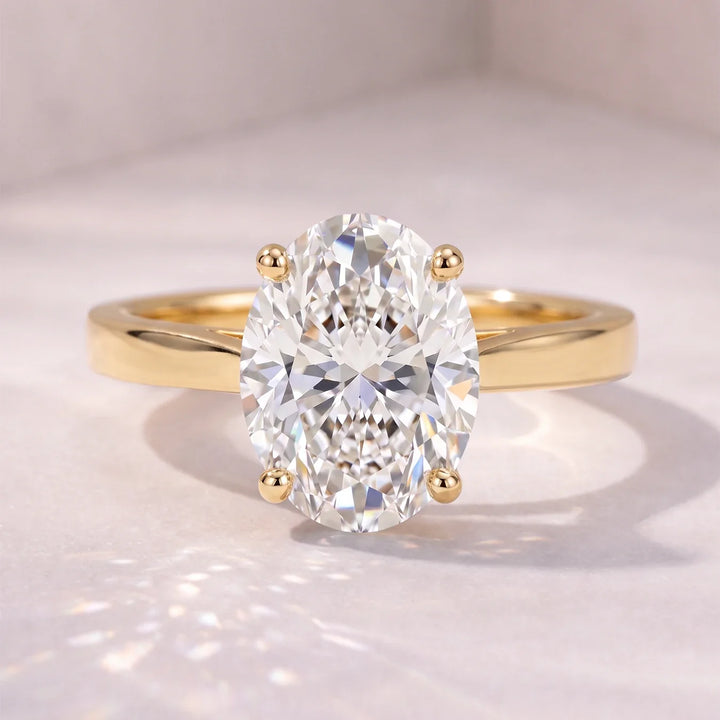
Cool white metals such as platinum and white gold are a natural match for a blue diamond, their bright, clean tone sharpening the colour and letting it stand out. Yellow and rose gold create a warmer contrast that some people love for its vintage character. A halo of white diamonds around a blue centre stone deepens the colour and adds sparkle, while a simple solitaire keeps all the focus on that striking blue. It comes down to whether you want the colour framed and intensified or left to speak entirely for itself.
How Lab Grown Makes Blue Attainable
This is where everything changes. A lab grown blue diamond has the same colour, sparkle, hardness and structure as a natural one, but because it is grown rather than mined it costs a small fraction of the price. The colour that was once the preserve of collectors and royalty becomes a realistic choice for an engagement ring.
At Lily Arkwright, our lab grown blue coloured diamond collection is perfect for those who want an elegant and regal engagement ring that can be both understated or striking, depending on preference.
A perfect example of a stunning lab grown blue diamond engagement ring available at Lily Arkwright is our Radiant Cut Paris Ring, combining this cut, which is trending in 2026, with the regal blue colour, and setting them both within the sharp contrast of 18k yellow gold is a look that was made to stun.

Visit our coloured lab diamond engagement rings page and see just how attainable a fancy coloured diamond has become.