


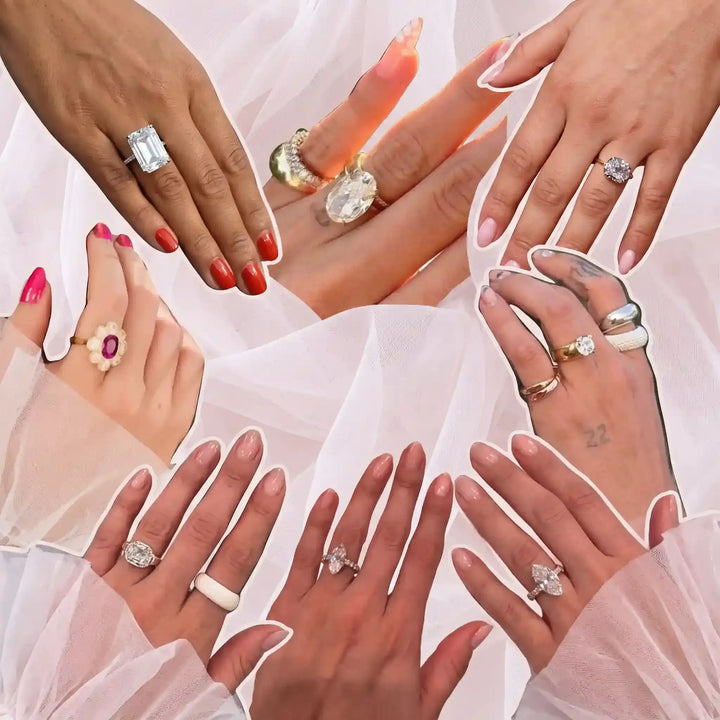



How much money should you really spend on an engagement ring?
From the average engagement ring cost to the most expensive engagement rings: This article will explore how much to spend on an engagement ring for your partner and reveal how much an engagement ring should actually cost.

The act of giving engagement rings is a long-standing tradition, an iconic symbol of love. With catchy phrases like "diamonds are a girl's best friend" boosting the popularity of diamond engagement rings, the expectation of how much money should be splurged on an engagement ring has many of us feeling a bit overwhelmed.
But with the rise of new technology allowing the creation of ethical and sustainable lab-grown diamonds and gemstones, coupled with a more budget-conscious cultural mindset, you might not need to break the bank to snag that perfect engagement ring!
In this article, we'll explore what to expect when buying an engagement ring, the average price of an engagement ring, how to find the perfect budget engagement rings, and debunk some famous myths about how to spend your money!
Buying an engagement ring
Determining how much money to spend on an engagement ring can be a hot topic, but understanding pricing and typical spending habits can help you when you start your search and avoid unpleasant surprises and discussions.
So, what should you expect when buying an engagement ring? Variation. Thanks to lab-grown diamonds and gemstones, beautiful larger diamonds are more accessible. Two visually similar rings can sit at very different price points depending on the carat weight, quality and origin of the centre stone, as well as the metal and complexity of the setting.
We get it; this doesn’t narrow down the answer much. Let's explore the "average" cost of an engagement ring.
The Average Engagement Ring Cost
For decades, one of the best-known pieces of advice surrounding engagement rings has been to set aside around two months' salary. However, this is not a financial rule, and modern buying habits increasingly suggest that setting a comfortable maximum budget is more useful than calculating ring spend as a percentage of income.
Rather than asking, “How many months of my salary should I spend?”, many buyers now begin with a hard spending cap. That figure might be £1,000, £1,500, £2,000 or considerably more depending on individual circumstances, but it allows the ring to be chosen around a realistic budget rather than the buyer attempting to reach an arbitrary salary-based target.
Illustrative customer-spend example: imagine a sample of 100 engagement-ring customers. Around 80 choose to spend less than £2,000, 12 spend between £2,000 and £2,999, six spend between £3,000 and £4,999, and just two spend £5,000 or more. While these figures are illustrative rather than Lily Arkwright sales data, they demonstrate an important point: engagement-ring spending can cluster around relatively firm price ceilings rather than moving directly in line with salary.
A buyer earning considerably more than another buyer does not necessarily want to spend proportionally more on their engagement ring. Savings, housing costs, wedding plans, personal taste and other financial priorities can all have a greater influence on the final budget than annual income alone.
The difference becomes particularly clear when compared with the traditional salary rule. According to the Office for National Statistics, average regular earnings in Great Britain were approximately £705 per week in July 2026. That works out at roughly £3,055 per month before tax.
Following the old two-month salary approach would therefore suggest spending around £6,100 on an engagement ring. A £2,000 budget, by comparison, represents only around 5.5% of annualised average regular earnings, whereas two months' pay represents around 16.7%. It highlights just how different a fixed-budget approach can be from the traditional salary-based formula.
More importantly, advances in lab-grown diamond technology mean spending less does not necessarily mean choosing a dramatically smaller centre stone or a less impressive design.
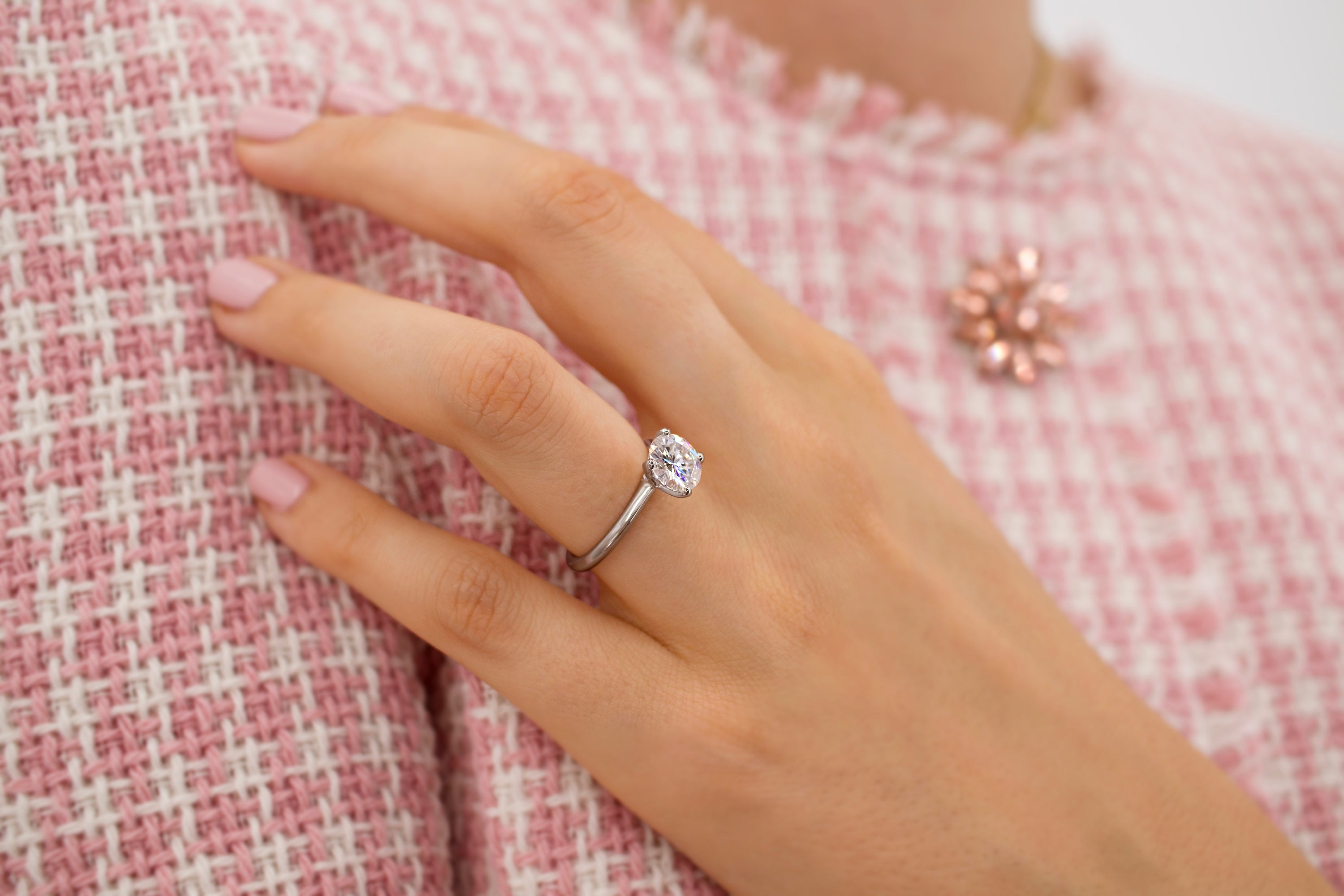
A beautifully cut lab-grown diamond can offer substantially more carat weight for the same budget than an equivalent natural diamond, giving couples much greater flexibility over where their money is spent.
The most expensive engagement rings
Topping the list of the most expensive engagement rings is the Pink Star Diamond ring, a mesmerising 59.60-carat pink diamond mounted on a platinum ring. This unparalleled gem fetched a jaw-dropping $71.2 million at auction, setting a record for the most expensive diamond ever sold.

Following closely is the Blue Moon Diamond ring, a flawless 12.03-carat blue diamond set in a platinum ring surrounded by colourless diamonds. This exceptional piece of jewellery fetched a remarkable $48.5 million at auction, emphasising the allure of rare coloured diamonds in the world of high-end engagement rings.
In addition to these extraordinary diamonds, iconic engagement rings from old jewellery houses have achieved stratospheric price tags. These masterpieces often feature large, flawless diamonds with exceptional cuts, complemented by intricate and artistic designs.
Ultimately, the most expensive engagement rings transcend mere symbols of commitment, evolving into wearable works of art that encapsulate luxury, rarity, and timeless beauty. Far removed from everyday life - these pieces are investment pieces and would be lucky to even be worn.
How much should an engagement ring actually cost
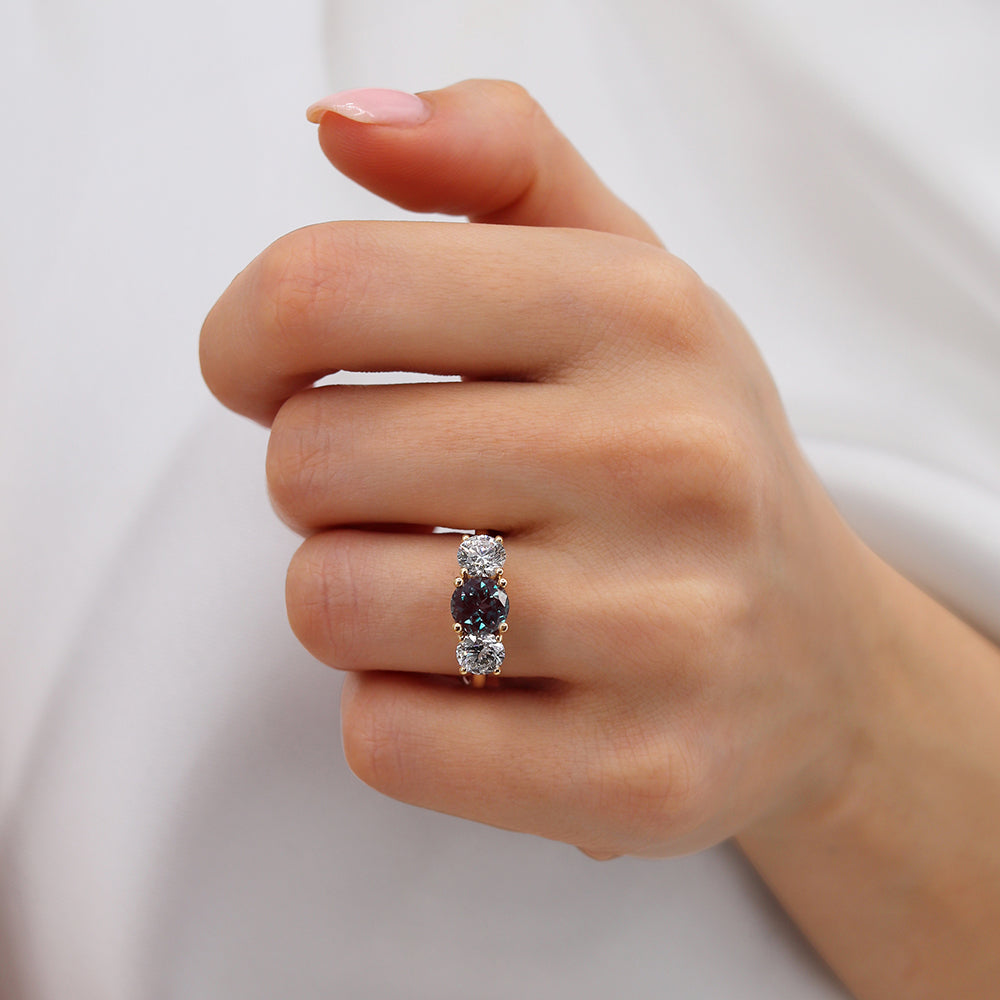
Many factors come into play when costing an engagement ring. The centre stone is usually the largest variable, with carat weight, cut, colour, clarity and whether the diamond is natural or lab-grown all affecting the final price. The precious metal, number of additional stones and complexity of the setting also play a part.
Ultimately, the answer is personal preference. If your partner prefers to keep things classic with a sleek solitaire and a round-cut diamond, beautiful lab-grown options can be found around the £1,000 mark. More elaborate settings, larger centre stones and bespoke designs can push the budget considerably higher, while natural diamonds will generally command a higher price for an equivalent carat weight and specification.
This is another reason why deciding on a budget before shopping can be useful. Rather than starting with a particular diamond and allowing the final cost to determine the budget, couples can decide what they are comfortable spending and then balance stone size, specification, setting and metal within that figure.
There's a noticeable change happening in the engagement ring market—the surge of lab-grown diamonds and gemstones. These alternatives allow buyers to achieve the same styles, cuts and impressive centre-stone sizes at significantly more accessible price points. Lab-grown diamonds are carefully created in controlled environments and have the same chemical and crystal structure as natural diamonds.
Simultaneously, lab-grown gemstones, such as vibrant sapphires and rubies, emerge as ethical and stunning alternatives to their natural counterparts.
This shift isn't just a passing trend; it's a conscious decision by couples to align their values with their purchasing choices. Lab-grown options can give buyers greater control over their budget while still allowing them to prioritise the design, size and style that matters most to them.
The affordability of lab-grown options allows couples to explore various styles and designs without the constraints of a hefty price tag. This democratisation of choices empowers individuals to select rings that reflect their unique preferences and styles while adhering to their budget.
Because of the advent of this technology, the answer to the question of “How much should an engagement ring actually cost?” is becoming increasingly personal. There are now more ways to create a dream engagement ring at multiple price points, making an arbitrary salary rule much less useful than deciding what you genuinely feel comfortable spending.
How much to spend on an engagement ring
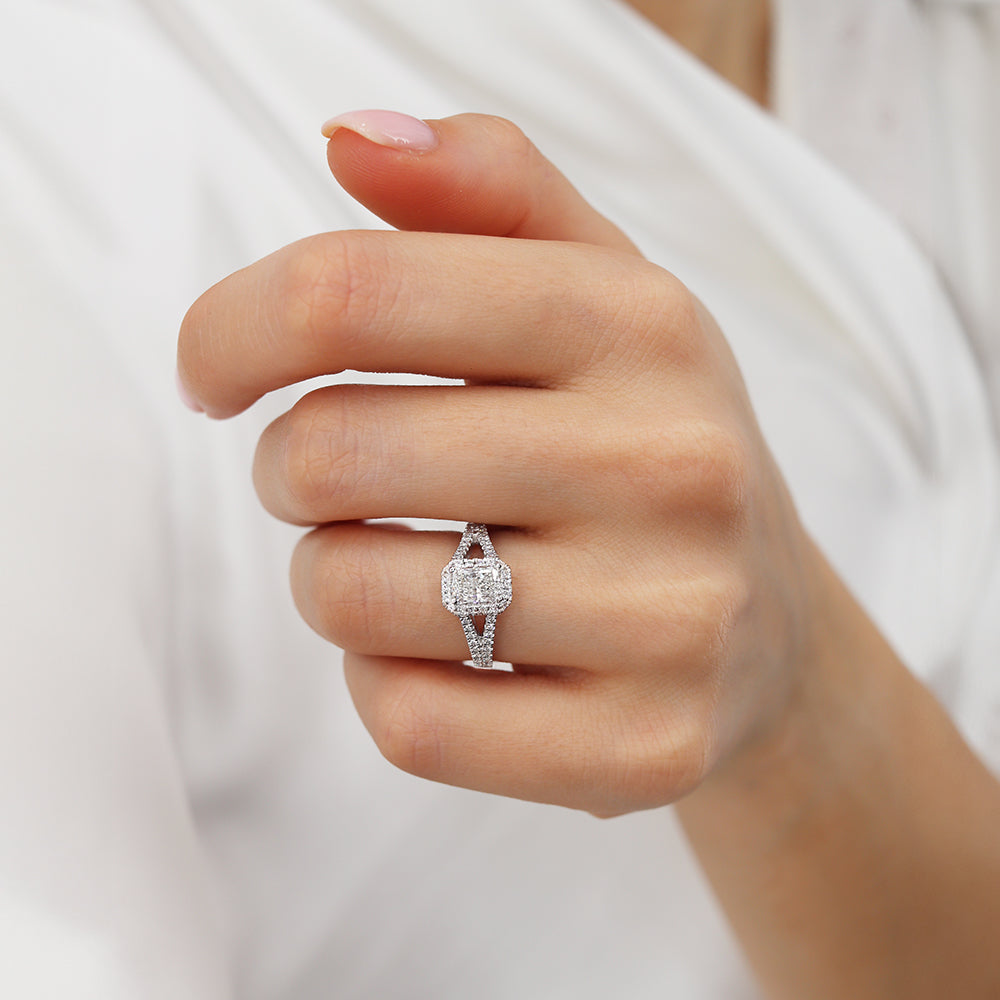
In the pursuit of the perfect engagement ring, couples are increasingly embracing affordability without sacrificing the aesthetics or meaning associated with this cherished symbol. The traditional notion of allocating two months' salary to a ring is giving way to a more individualised, practical and financially considered approach.
Perhaps the most useful starting point is simply to decide on your maximum comfortable spend. Treat it as a ceiling rather than a target. If the perfect ring comes in below it, there is no reason to spend more simply because an old formula suggests you should.
Lab-grown diamonds and gemstones are also giving couples greater freedom within these fixed budgets. A buyer who has decided that £1,500 or £2,000 is their maximum can compare different carat weights, cuts, settings and metals without automatically having to increase that budget to achieve the look they want.
The true value of an engagement ring is the seal it provides to your love story. And if you still don’t know how much to spend, think of the perfect ring. What carat weight is it? What cut and what style? This will give you a fantastic base to work from. If it doesn’t fit within your budget, try swapping natural diamonds for lab-grown diamonds, exploring different diamond colours or considering different metal and setting options.
The most important thing is to enjoy the experience of shopping for your engagement ring. Always remember that however much you can comfortably afford is the correct amount to spend, and that love isn’t measured in coins or carat weights.
Written by Rowan Aplin