




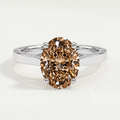






Platinum vs White Gold: Which Metal Should I Choose for My Engagement Ring?
Updated
Platinum and white gold can look very similar when a ring is new. The more useful differences are how they feel on your hand and how their finish changes with wear. If you’re choosing an engagement ring, compare the same design in both metals and think about the upkeep you’re comfortable with.
On smaller screens, scroll across to compare all columns.
| Consideration | 18ct white gold | 950 platinum |
|---|---|---|
| Composition | 75% gold, mixed with other metals. | 95% platinum, mixed with other metals. |
| Colour and finish | Often rhodium-plated for a bright white surface; the underlying alloy can look warmer as the finish wears. | Naturally white; does not need rhodium plating for its colour. |
| Feel | Usually lighter than a comparable platinum design. | Usually heavier than a comparable white-gold design. |
| Wear | Can scratch; wear depends on the alloy, design and use. | Can scratch and develop a softer-looking patina. |
| Maintenance | Rhodium replating may be wanted as the finish wears. | Professional polishing can restore a brighter finish if preferred. |
| Cost | Compare the current complete-ring quote and likely servicing. | Compare the current complete-ring quote and likely servicing. |

What is white gold?
White gold is gold mixed with other metals to give it a paler colour. It is often finished with rhodium plating for a bright white surface. As that coating wears, the underlying alloy’s colour can become more noticeable. Replating can restore the finish; how soon you want it done depends on wear and your preference.
An 18ct gold ring contains 75% gold, while 9ct contains 37.5%. The remaining metals affect the alloy’s colour and properties. Those percentages describe composition, so a higher gold content is not, by itself, a promise that the ring will resist wear better.

What is platinum?
Platinum is a naturally white metal. A 950 platinum ring contains 95% platinum, with the remaining 5% made up of other metals. The fineness mark in its hallmark records that platinum content. The Royal Society of Chemistry’s platinum overview explains the metal’s properties.
Platinum does not need rhodium plating to give it a white colour. Its surface still changes with wear: fine marks can gradually create a softer, satin-like finish called patina. You may like that finish or prefer professional polishing to restore a brighter shine.
How do they feel and wear?
For comparable designs, platinum will usually feel heavier than white gold. Some people like that weight; others prefer a lighter ring. Try both if you can, because the width and shape of the band also affect the feel. A heavier metal does not make the same design look smaller.
Both metals can scratch. There is no useful blanket answer to “which is harder?” without knowing the alloys and how the rings were made. For daily wear, the construction of the setting matters as well as the metal. Look at the band, the height of the centre and the claws that hold the stones. The ring styles and settings guide explains the construction details to compare.

What maintenance will the ring need?
White gold may need its rhodium finish renewed, while platinum may be polished if you prefer a brighter surface to patina. Ask about the care of your chosen alloy and the cost of servicing. There is no single replating schedule that suits every wearer. Read our engagement ring care guide and the current aftercare and resizing terms.
With either metal, have loose stones, bent claws or other damage checked before continuing to wear the ring. A polished surface does not tell you whether the setting is secure. If you have a known metal sensitivity, ask the team to confirm the alloy used in the ring you’re considering; the metal name alone is not a guarantee of suitability.
Is platinum more expensive than white gold?
Compare current prices for the same design, stone and finger size. Metal prices change, and a finished ring’s price also reflects its weight and the work involved. Avoid assuming either metal will always be the cheaper choice. Include likely servicing costs in the comparison, rather than looking only at the purchase price.
Choosing your metal
Try the ring with your hand relaxed and notice its weight, finish and fit. If you already have a wedding band, try the two together and check where they touch. Ask about any rubbing between the settings; choosing the same metal does not remove the need for a good fit.

Platinum may appeal if you like a naturally white metal and its heavier feel. White gold may suit you if you prefer its feel in your chosen design and are comfortable with renewing the rhodium finish when needed. The choice comes down to the ring you enjoy wearing and the care you are happy to give it.
Compare platinum engagement rings and white gold engagement rings in the designs you prefer. A showroom or virtual appointment can help you compare the available options.