









What Is a Dutch Marquise Diamond?
Updated 12 November 2026
If you like traditional marquise diamonds but prefer sharper lines, the Dutch marquise may catch your eye. Its elongated outline combines pointed ends with straighter, angled sides. The result is a different silhouette, even before you consider the setting.
The name is a starting point, rather than a complete description of the diamond. Look at the actual stone: two examples described as Dutch marquise can have quite different proportions and facet patterns.
What Is a Dutch Marquise Diamond?
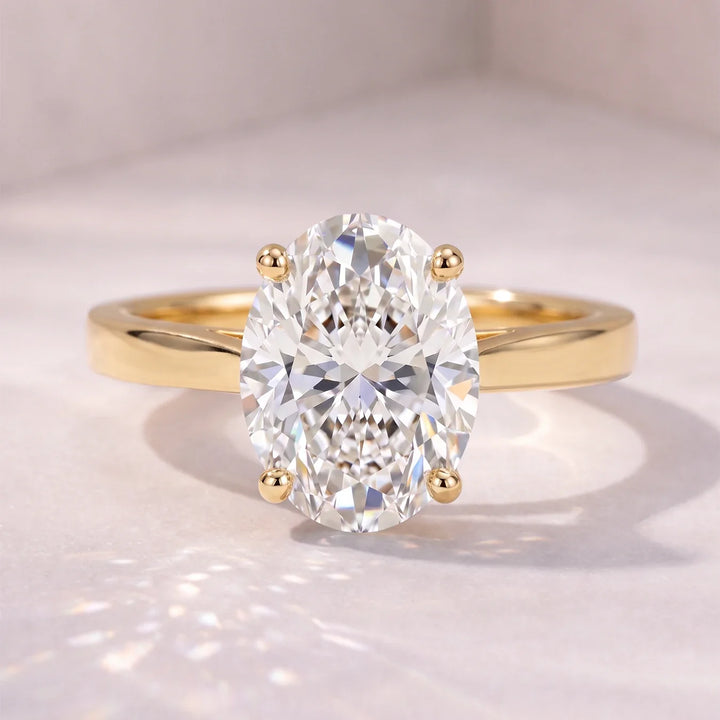
Dutch marquise is used to describe an elongated, angular outline, often resembling a stretched hexagon with pointed ends. The outline is the shape you see from above. The arrangement of facets—the flat, polished surfaces—determines much of how light moves through it.

An angular outline with long, straight facets.
Do not assume that the name tells you the facet count, proportions or wording on a grading report. Ask to see the report for the particular diamond and check its shape description and measurements alongside clear photographs or video.
Some examples look narrow and sharply geometric; others have a fuller centre. There is no need to choose the longest stone simply because it appears more dramatic. The balance of the outline on your hand matters more.
Dutch Marquise vs Marquise: What's the Difference?
A classic marquise has two pointed ends joined by curved sides. In a Dutch marquise, straighter edges give the outline a more angular appearance. The distinction is easiest to see when you compare the stones face-on.

The Lily Arkwright Margot Marquise Lab Diamond Yellow Gold Bezel-Set Engagement Ring shows the curved outline of a conventional marquise in a bezel setting.
Compare the length and width in millimetres, rather than relying on carat weight alone. Two diamonds of the same weight can occupy different amounts of space on the finger.
Both outlines have pointed ends that need protection. Ask how the proposed setting supports the tips and how high it will sit above the finger.
What Should You Compare Before Choosing?
Start with the outline, then consider colour and setting. If you are also drawn to coloured diamonds, compare colour and shape separately: a striking colour can change the character of the whole ring. Take time to decide which feature you most want to notice.

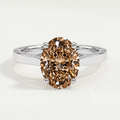
An angular centre stone in a claw setting.
View the stone at a normal distance as well as close up. A magnified photograph is useful for details, but it cannot show you exactly how the finished ring will feel on your hand.
Does a Dutch Marquise Diamond Sparkle?
The appearance depends on the individual diamond’s facet pattern and cutting. Long, straight facets can create broader reflections; other arrangements break the light into smaller flashes. Neither effect is automatically better. Choose the one you enjoy watching as the stone moves.
Look across the centre in more than one lighting condition. Elongated diamonds can show dark areas, sometimes called a bow-tie. Some contrast is part of their appearance, but persistent darkness can be distracting. A moving video is more informative than a single bright photograph.

An angular outline with a different facet pattern.
Measurements help you compare proportions, but they cannot replace looking at the actual stone.
What Settings Suit a Dutch Marquise Engagement Ring?
A solitaire ring lets the outline take the lead. Keep an eye on the claws as well as the band: their position changes how clearly you see the points and angled edges.
If you like a defined metal edge, a bezel setting may appeal. Its fit must be designed around the particular stone, rather than treating every elongated shape as interchangeable.

The Lily Arkwright Dulcie Bezel-Set Lab Diamond 18k Gold Engagement Ring illustrates a substantial bezel around a round centre. It is a setting reference, not a Dutch marquise design.
Whichever style you choose, ask the jeweller to explain how the setting protects the tips and whether the finished ring will sit comfortably beside a wedding band.
Can You Get a Lab Grown Dutch Marquise Diamond?
This outline can be cut from a lab grown diamond, as well as a natural diamond. Availability depends on the stones a supplier can source. If you want it for an engagement ring, ask the team about the specific stone, its report and a suitable setting before making plans around a photograph.
If you prefer the softer curves of a conventional marquise, explore our marquise lab diamond engagement rings. Compare the outlines side by side: the right choice is the one you want to wear, rather than a prediction about the next trend.