









Hearts & Arrows Cut Moissanite
Updated 10 November 2026
Hearts and arrows describes a pattern made by reflections from a stone’s facets. In a round brilliant cut with the right facet arrangement and precise optical symmetry, a specialist viewer reveals eight arrows from above and eight hearts from below.
The pattern comes from the cutting, rather than simply from being moissanite or diamond. You won’t find it in every stone, and the hearts are not something you should expect to see while wearing a ring.
Reading the two views
The arrows are viewed through the top of the stone, with its flat table facing you. The hearts are viewed from the underside, through the pavilion. A clear pair of images should identify which view you’re seeing.
Look for similar shapes, even spacing and a balanced arrangement around the centre. Uneven outlines or sections that do not line up deserve a closer look. The stone also needs to be positioned correctly in the viewer: a tilted stone or a blurred image makes comparison harder.
Look beyond the pattern
A neat pattern is useful information about optical symmetry, but it doesn’t tell you everything about a stone’s appearance. Look at it without the viewer too. Move it gently and, where possible, compare it in daylight and indoor lighting.
Moissanite often produces noticeable flashes of colour. Hearts-and-arrows cutting does not change it into diamond, so choose the appearance you enjoy rather than expecting the two materials to look identical.
If a stone is described as “super ideal”, ask what the supplier means by that term and what evidence accompanies the description. A diamond cut-grading system should not be assumed to apply to moissanite.
Choosing a stone and setting
If you’re interested in a hearts-and-arrows moissanite, ask which shapes and sizes are currently available for your preferred ring. Confirm the dimensions, price and expected lead time, and ask whether the images show the actual stone or a representative example.
You can contact the team at hello@lilyarkwright.com. You can also compare standard cuts when deciding which look you prefer.
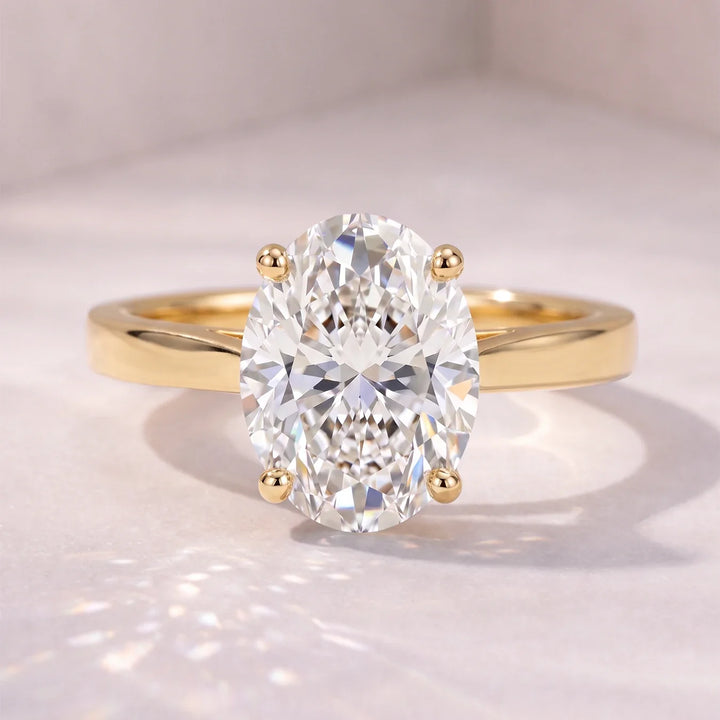
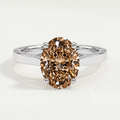
The setting matters too. Lulu’s elongated cushion outline and slim solitaire band show how the shape of the centre can become the focus of a simple ring. The photograph below illustrates the overall design; confirm the cutting style of any stone you select.
Take time to compare the views that matter to you: the pattern through the viewer, the stone in ordinary light and the finished ring on your hand. Each tells you something different.